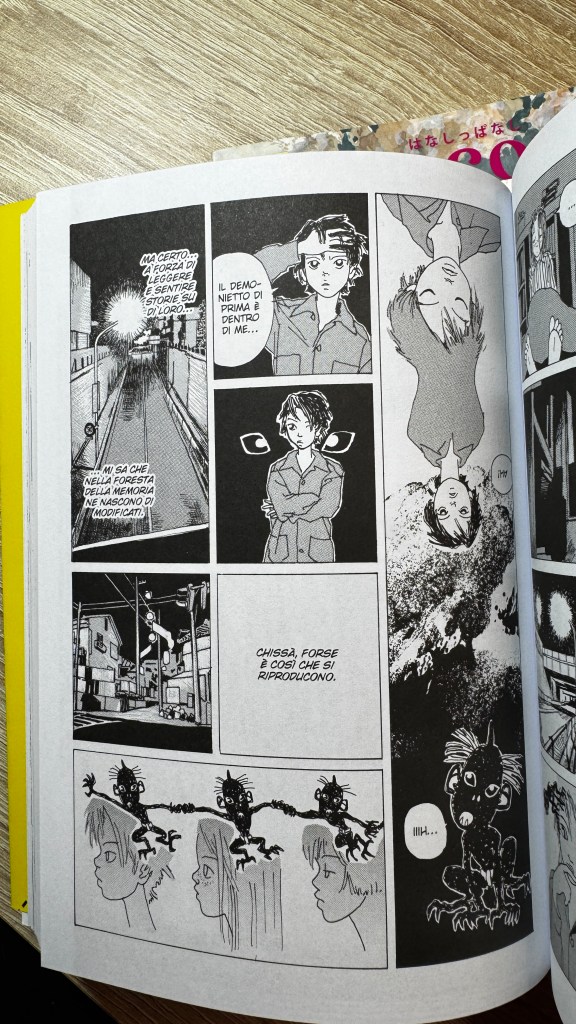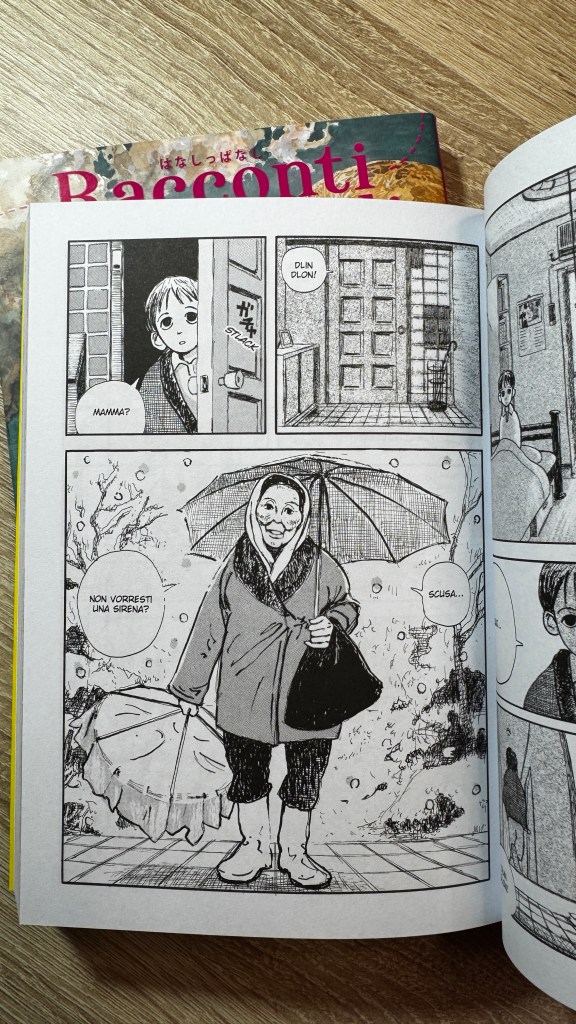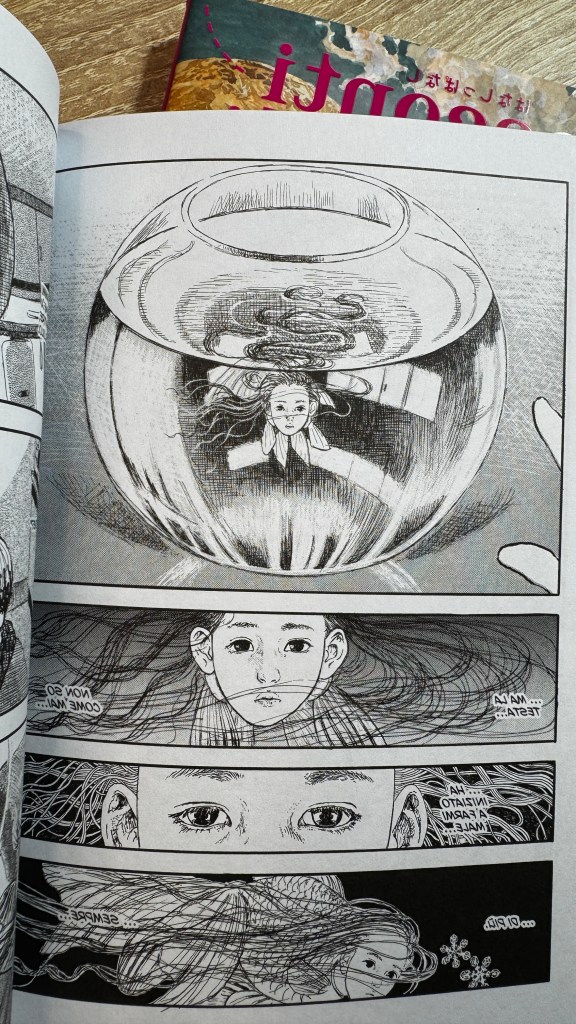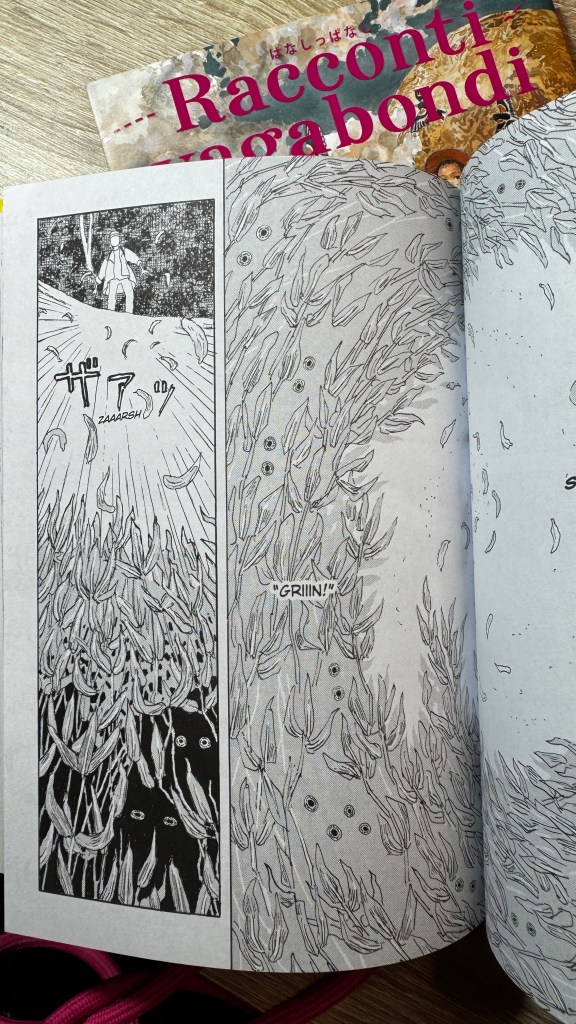
“Racconti vagabondi” di Daisuke Igarashi, ed. Toshokan, realismo magico sorprendente e delicato

Hanashippanashi: Surprising and Delicate Magical Realism — A Multilingual Reviewはなしっぱなし:驚きと繊細さを併せ持つマジック・リアリズム ― 多言語レビュー
Capita a volte di riconciliarmi col fumetto giapponese. Sono momenti rari e preziosi, di cui parlo volentieri. Quando sono tornata al vecchio amore del manga, dopo anni di assenza, credevo di trovarlo maturato, migliorato, incredibilmente avvincente. Non vi racconto neanche quale amarezza ho provato nel vedere che per certi versi era pure peggiorato, un po’ in marcescenza.

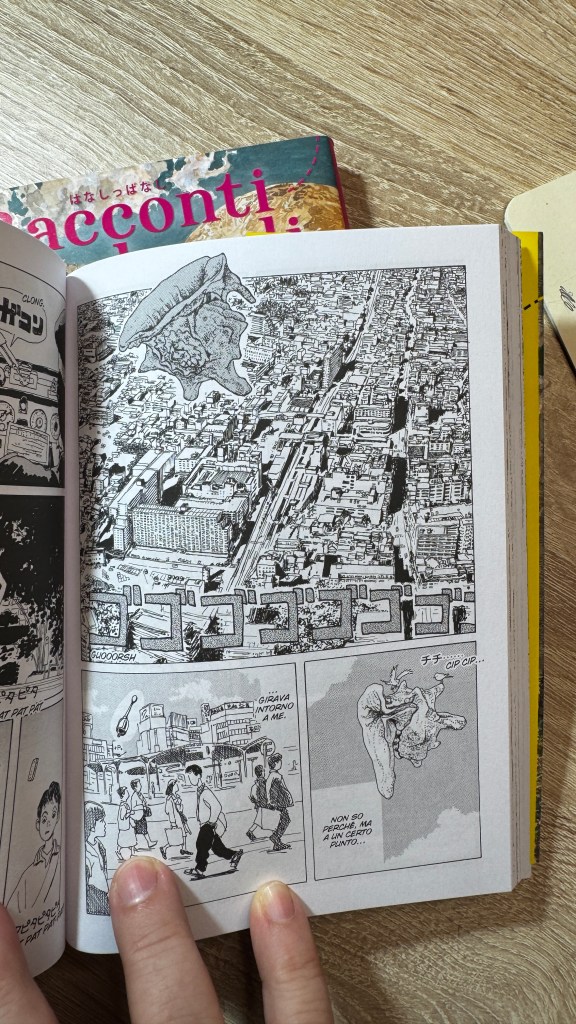
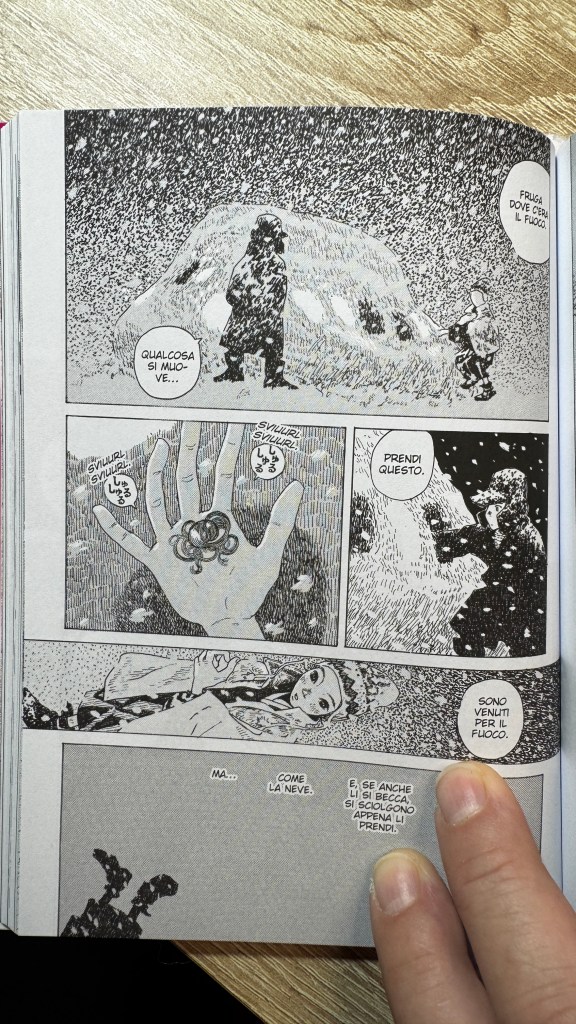
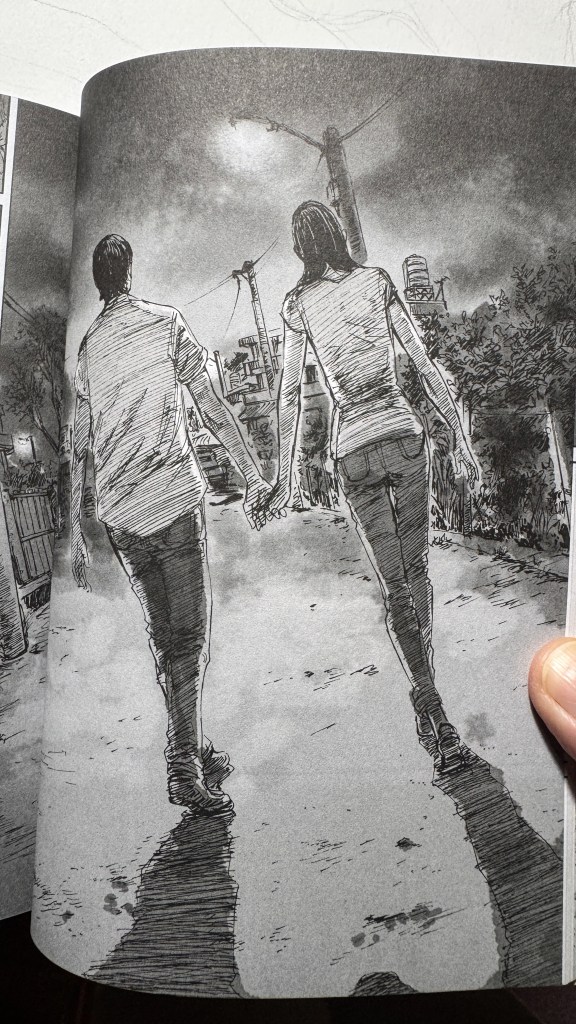
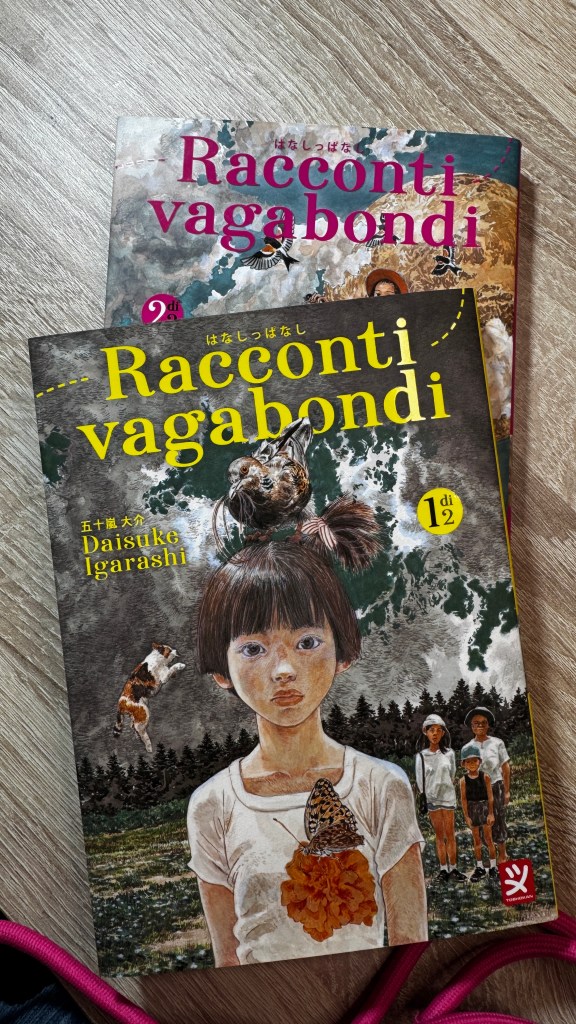
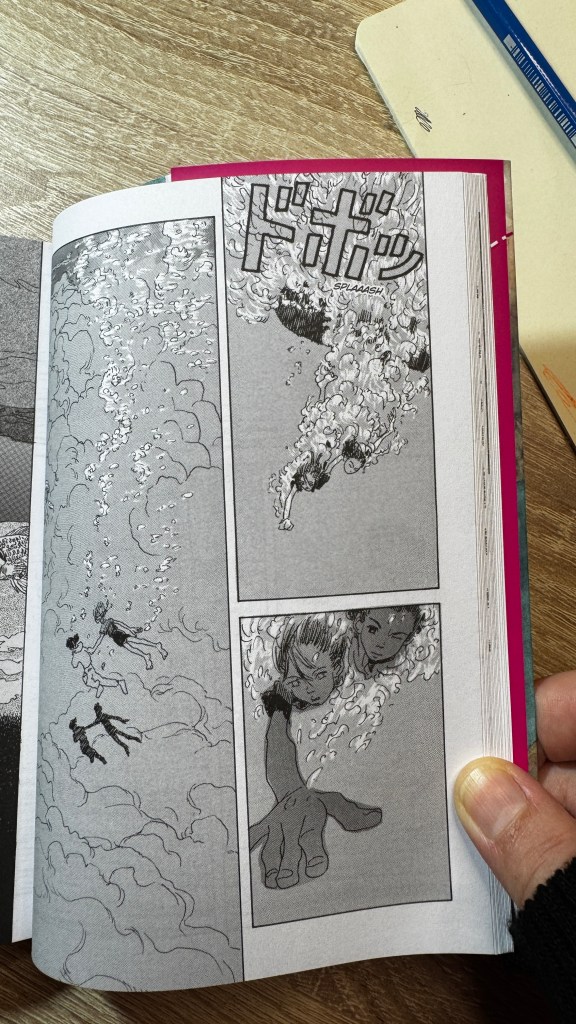
Occasionalmente compare un titolo che fa capire come l’avanzamento ci sia stato eccome, ma per varie ragioni non emerge. Mi è capitato ultimamente con Racconti vagabondi (Hanashippanashi) di Daisuke Igarashi, che mi ha colpita non appena spiccato dallo scaffale, per il disegno, che è uno dei fattori che maggiormente considero nella scelta dei manga.

Racconti vagabondi è la prima pubblicazione di Igarsahi e risale al 1994. In Italia sono stati portati altri suoi titoli, come Designs e il più celebre Children of the sea, da cui è stato tratto anche un anime. Molto apprezzato e premiato in patria, ma considerato un autore di nicchia, qui in Italia non è molto noto. Racconti vagabondi è una raccolta di brevi storie, a volte brevissime, in cui il confine tra reale e favolistico, mitologico e irrazionale si dissolve, in favore di una contemplazione assorta e densa di perplessità. Infine, storia dopo storia, la perplessità si scioglie in una percezione alterata, in cui la posizione esterna del lettore/osservatore diventa parte integrante del racconto, accolta sia come un altro degli strati dimensionali possibili, sia come fuoco di una intradimensionalità che attraversa tutte le storie.
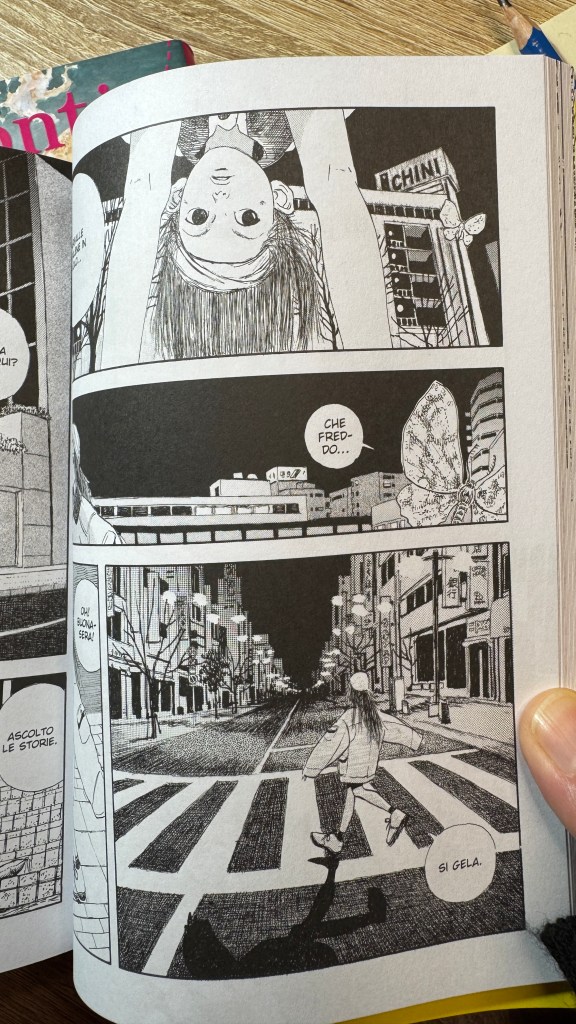
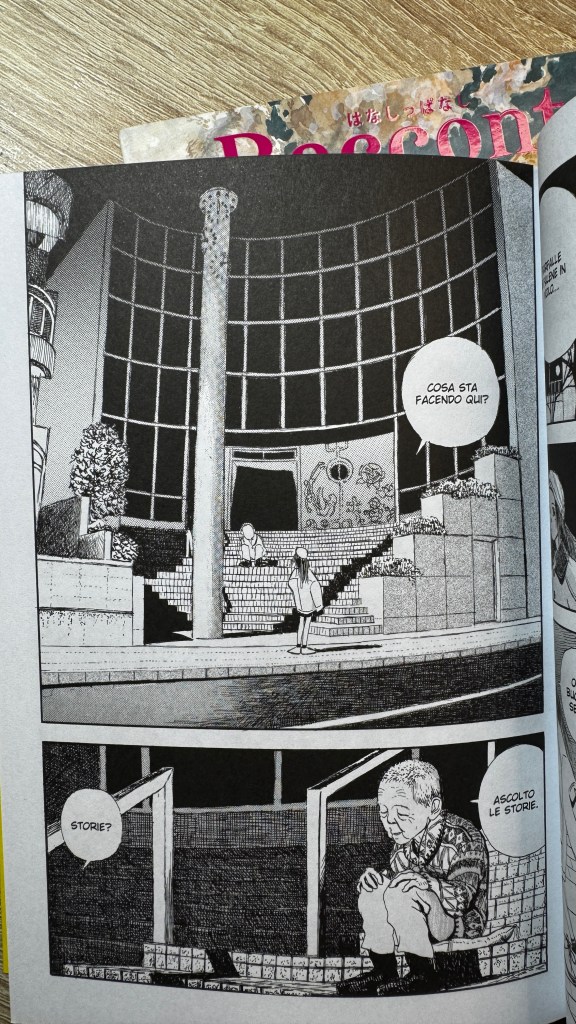
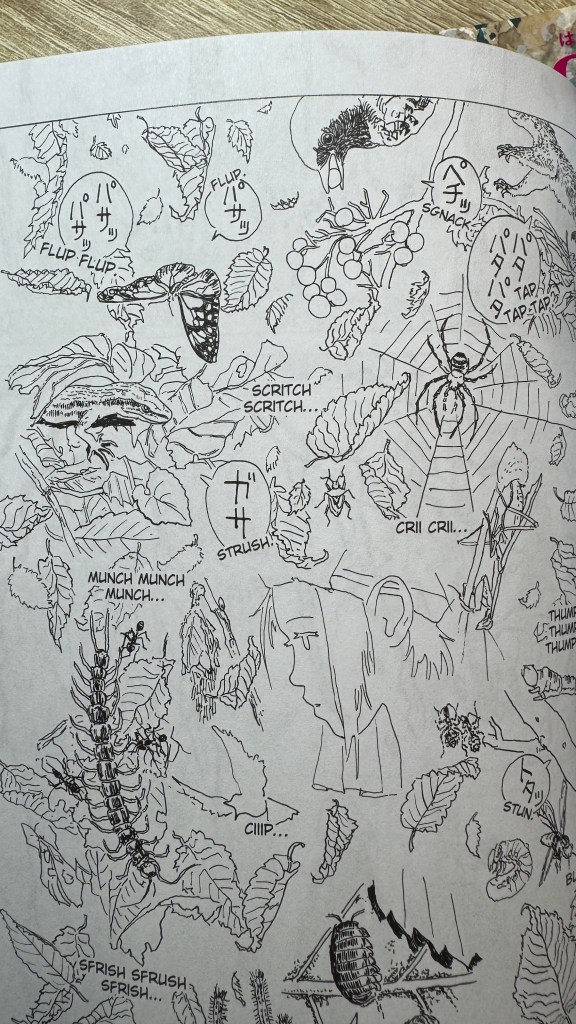
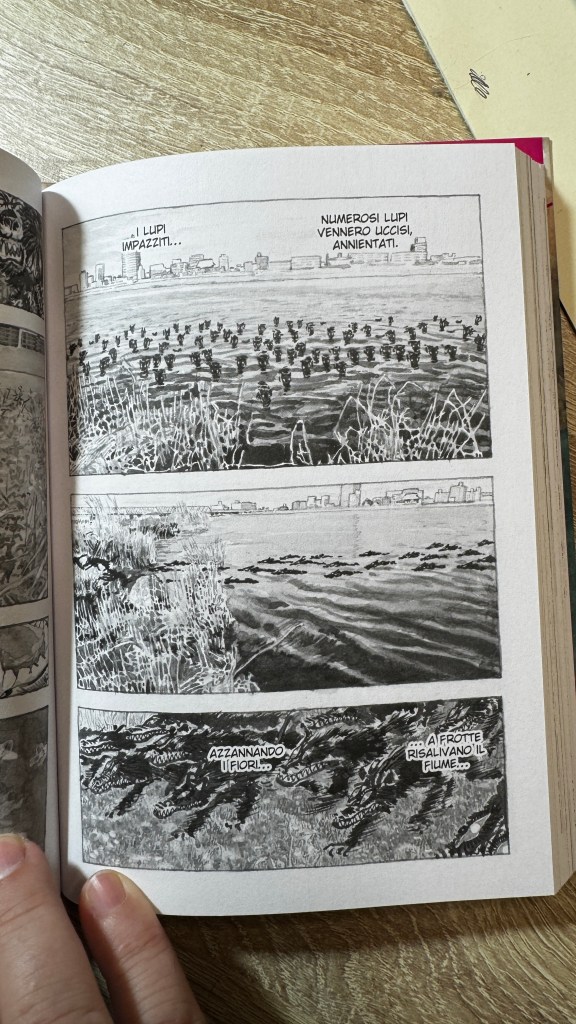
Fortissimo è il carattere di hybris, che prende di volta in volta fisionomie differenti di creature davvero, davvero strane, non necessariamente confinate nel folklore, ma che abbracciano anche la contemporaneità. Anche le figure di animali “normali”, attraverso un segno grafico scavato e sottile, diventano mostruose. L’ibrido non è solo grafico, ma anche contenutistico: la pluralità imbricata di codici visivi e narrativi, crea una vera e propria distorsione cognitiva, tanto che diventa irrilevante comprendere la dinamica della storia, quanto contemplarla, farne parte. Le storie sono aperte, non devono essere interpretate, ma assorbite. Per godere appieno della lettura consiglio di spezzarla il meno possibile, poiché la sensazione di smarrimento si dissolve per accumulo.

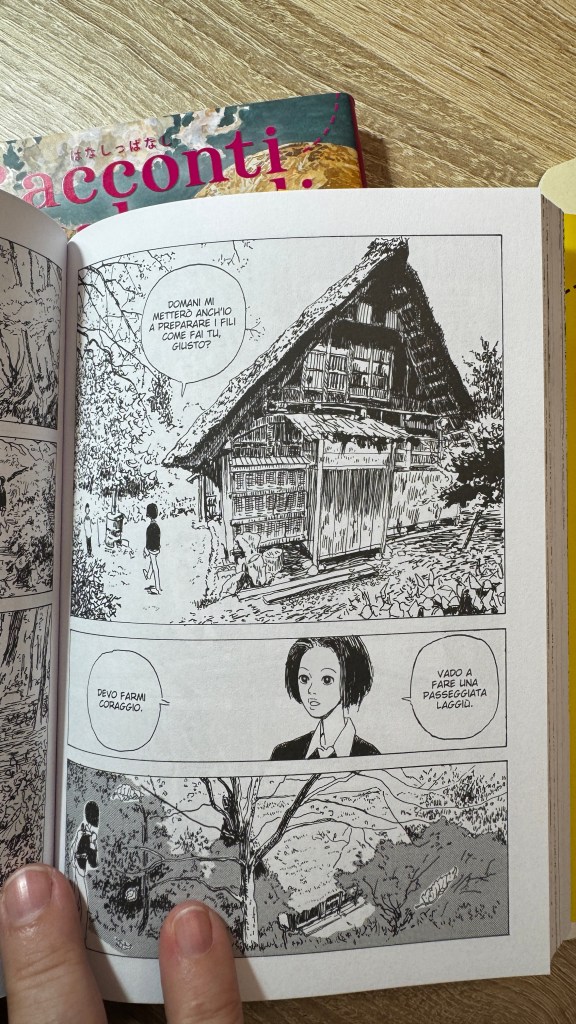
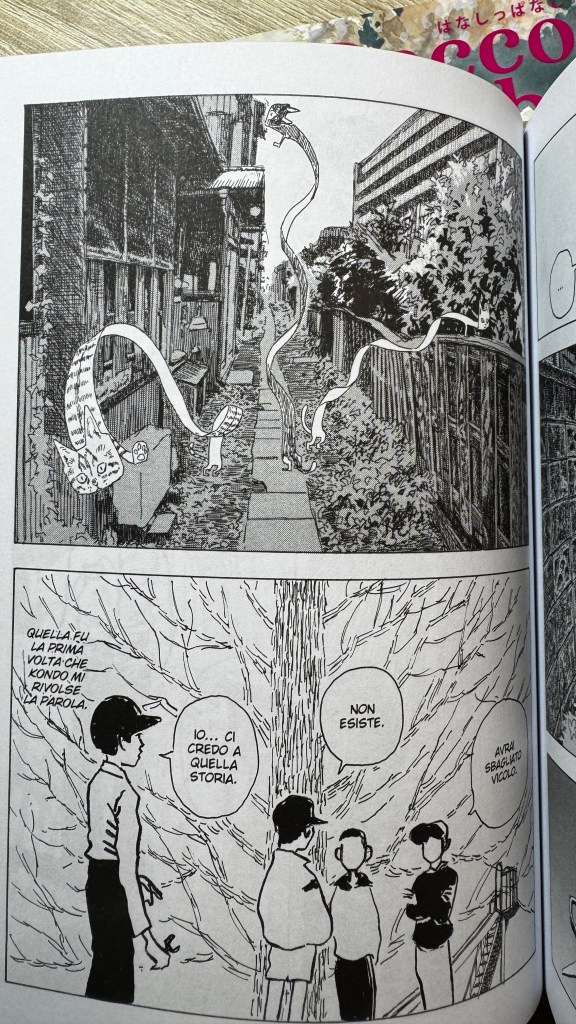
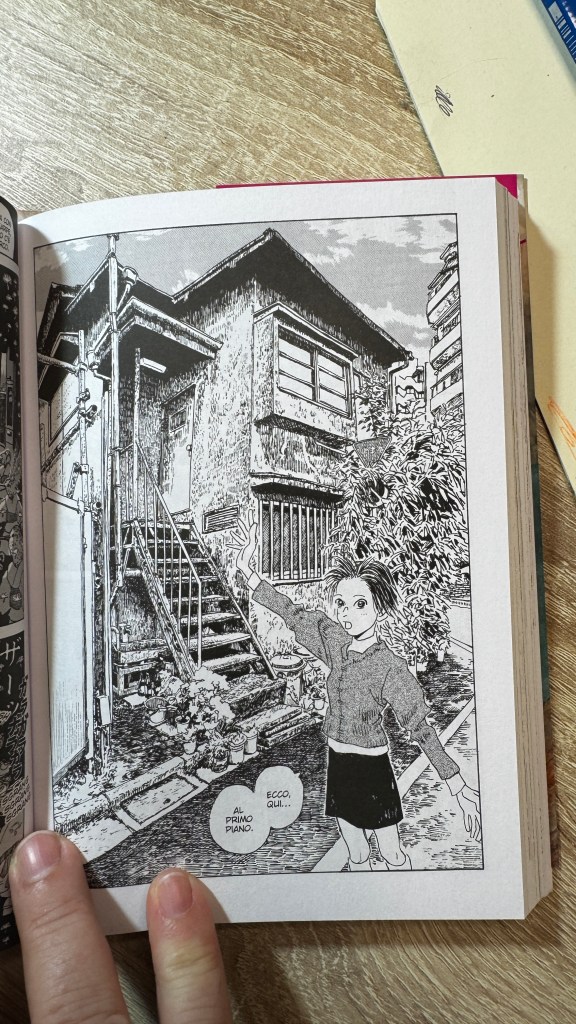
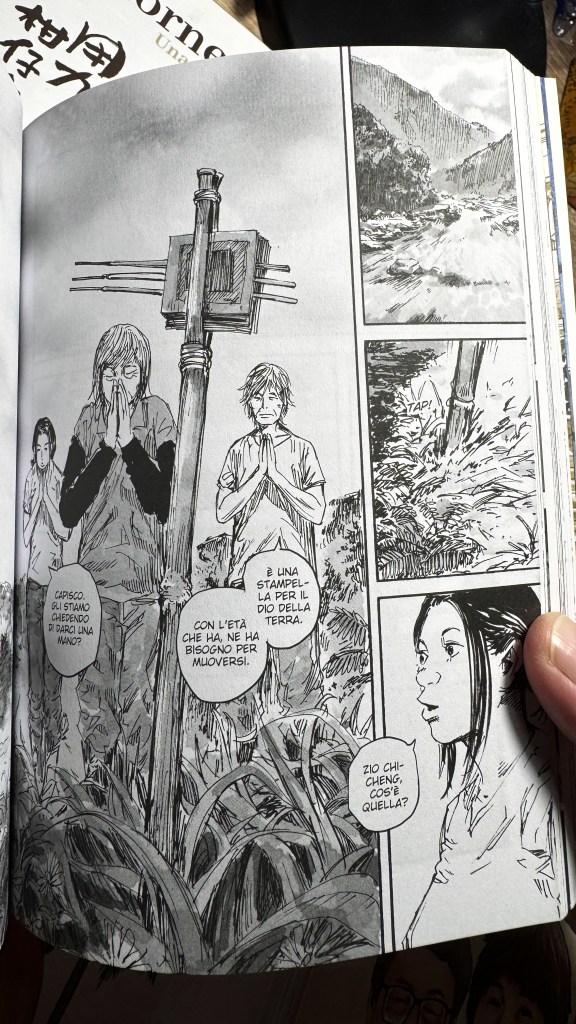
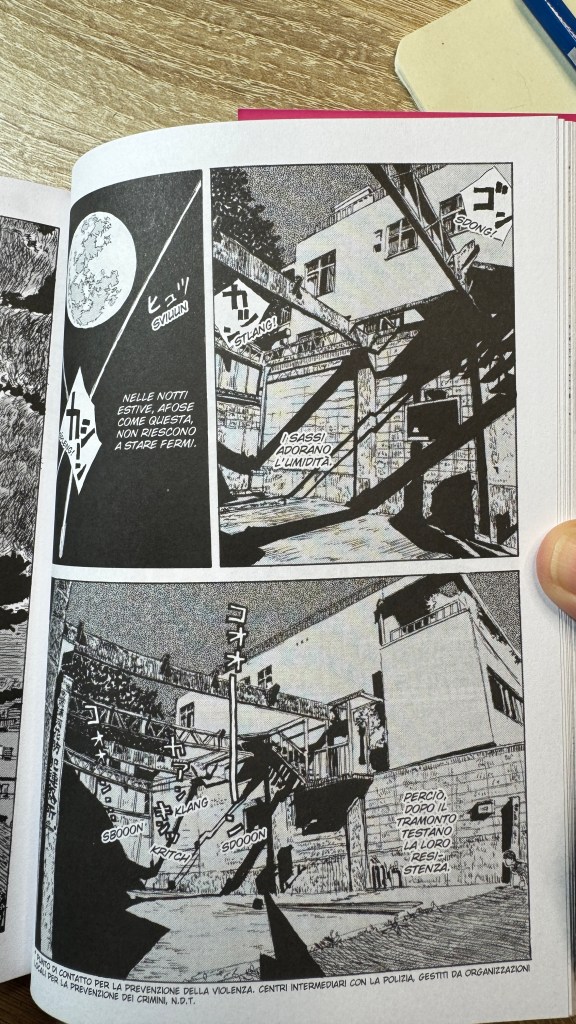
La cosa davvero realistica e solida è il paesaggio, che rimane sempre quello, il nostro, la realtà comunemente esperibile. Il paesaggio è un’ancora visiva e cognitiva senza la quale la dissonanza percettiva non sarebbe possibile. Ecco perché sono stati fatti paragoni tra Igarashi e Miyazaki, ma l’uso del paesaggio dei due autori è del tutto antitetico. Miyazaki fa un uso politico e sociale del paesaggio, in Igarashi è la costante attorno a cui si sviluppano mille variabili. La sicurezza nel paesaggio consente anche di non sentire ansia nella lettura: il racconto potrebbe finire la pagina dopo sennza troppi scossoni. Maggiore affinità invece è con l’opera di Inio Asano, anche lui un devoto del paesaggio urbano, con la differenza che Asano cala in pagina il riferimento poco o nulla elaborato, mentre Igarashi lo tiene su un livello sotto e lo rilavora a mano: una personale scelta che implica anche un passaggio in più e che mette una certa distanza stilistica tra i due.
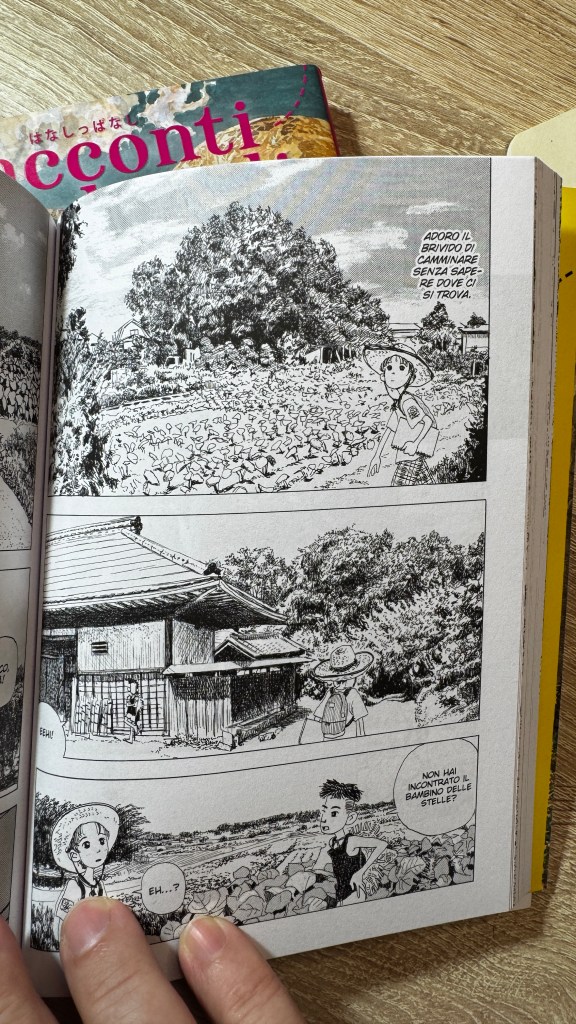
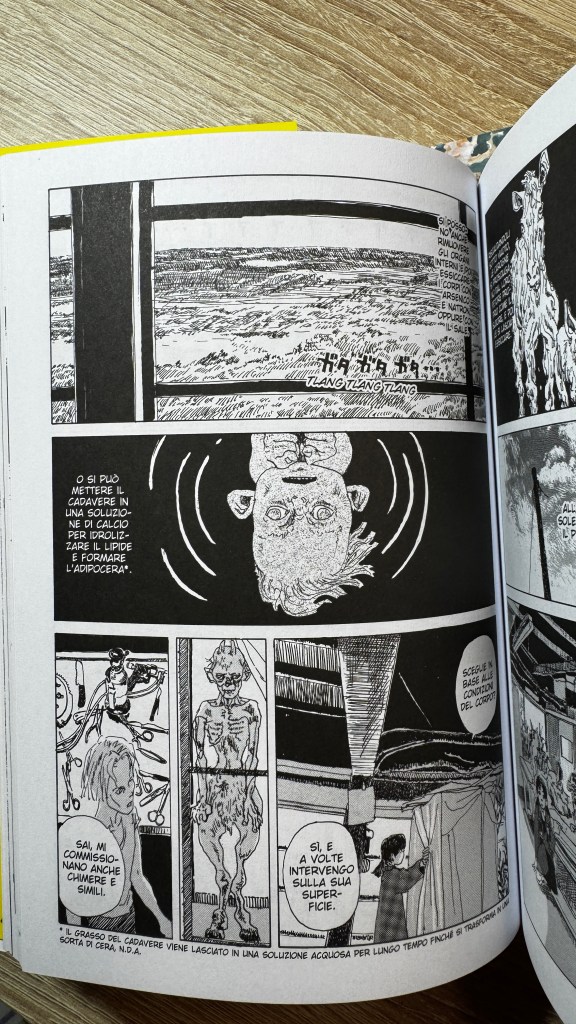
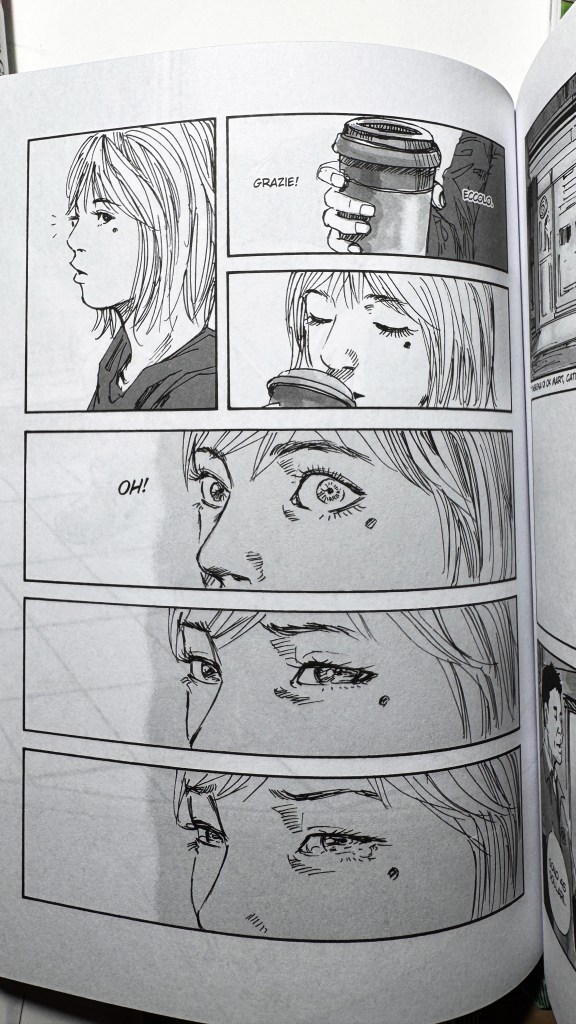
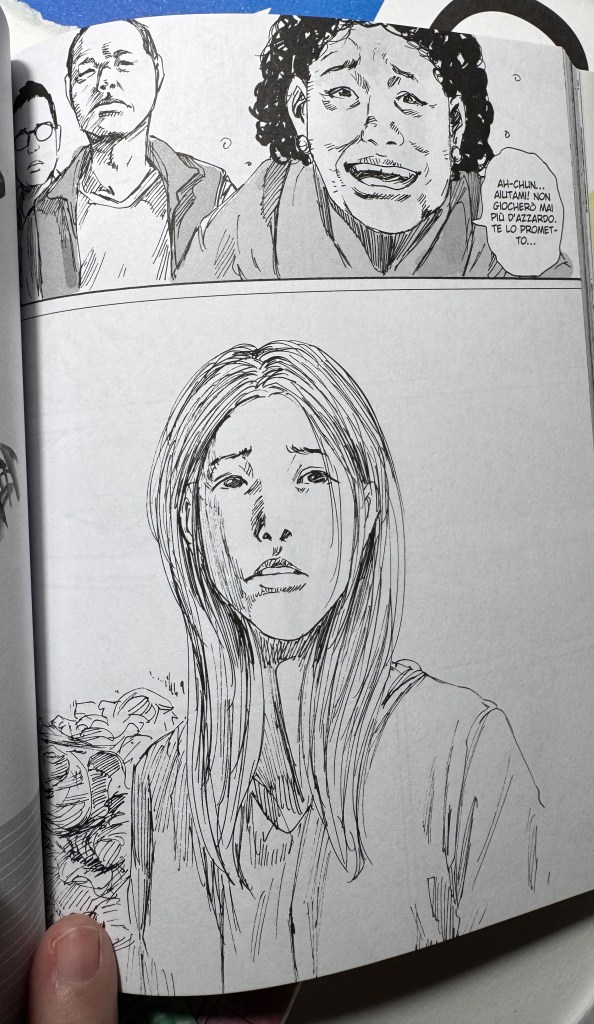
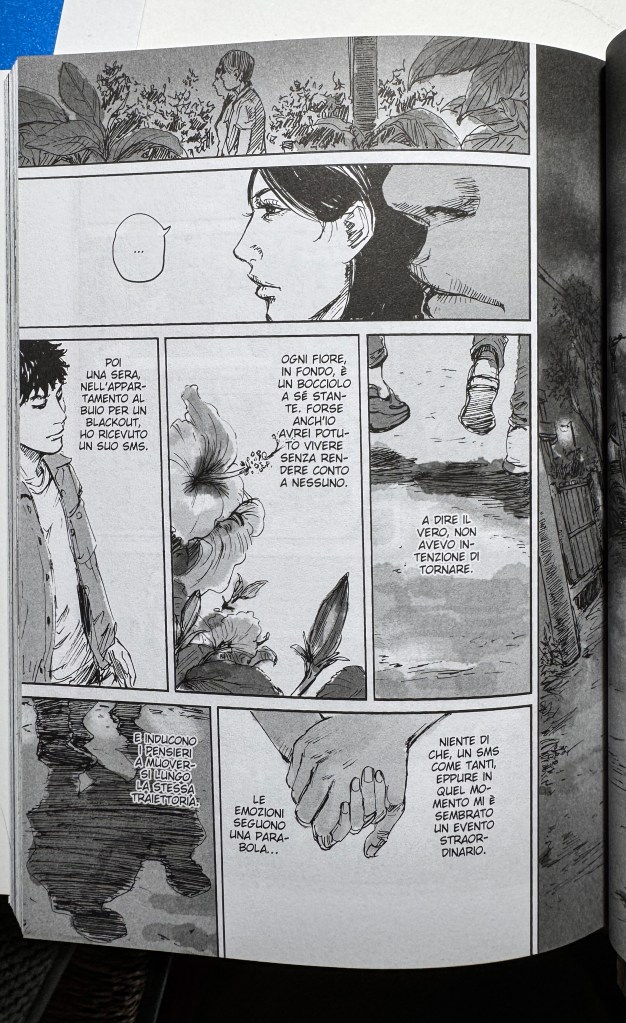
Lo stile è complesso ed estremamente personale, il segno affilato deve certamente qualcosa all’underground, ma è incredibilmente dolce e delicato. Questo imbricamento tra apparente bruttezza, delicatezza e poesia della rappresentazione e dei contenuti, è per me la cifra stilistica di Igarashi, ed è rarissima, per non dire unica. In una intervista alla fine del primo volume, Igarashi dice di avere lavorato molto con la school pen. La maggior parte dei manga sono disegnati con la famosa G-pen (in realtà un pennino). La school-pen (anche questa un pennino), è un po’ più sottile. Da qui deriva il segno affilato di Racconti vagabondi.

Una particolarità forse passata inosservata ai più, sono delle piccole variazioni di stile per adattare il segno alla narrazione (Igarashi conferma nell’intervista), cosa di cui in effetti non ci sarebbe stato bisogno.

Personalmente ho gradito più il primo volume, il secondo contiene delle storie a volte didascaliche non all’altezza delle precedenti.
This text was translated into English and Japanese with the assistance of ChatGPT (OpenAI).


Sometimes I find myself reconciling with Japanese comics. These are rare and precious moments, and I speak of them gladly. When I returned to my old love of manga after years of absence, I believed I would find it matured, improved, incredibly compelling. I will not even tell you the bitterness I felt when I discovered that, in certain respects, it had actually deteriorated, showing signs of decay.

Occasionally, however, a title appears that makes it clear that real progress has indeed taken place, though for various reasons it does not fully emerge. This recently happened to me with Hanashippanashi by Daisuke Igarashi, which caught my attention as soon as it stood out from the shelf thanks to its artwork—one of the elements I consider most when choosing manga.

Hanashippanashi is Igarashi’s first publication and dates back to 1994. In Italy other titles by the author have been published, such as Designs and the more widely known Children of the Sea, from which an animated film was also produced. Highly regarded and award-winning in Japan, though considered something of a niche author, he remains relatively little known here in Italy.

Hanashippanashi is a collection of short stories—sometimes extremely short—in which the boundary between the real and the fairy-tale, the mythological and the irrational dissolves, giving way to a contemplative atmosphere dense with perplexity. Gradually, story after story, that perplexity resolves into an altered perception, in which the external position of the reader-observer becomes an integral part of the narrative itself, accepted both as one of the possible dimensional layers and as the focal point of an intradimensionality that runs through all the stories.

The presence of hybris is extremely strong, taking on different forms each time in the shape of truly, truly strange creatures, not necessarily confined to folklore but also embracing contemporary settings. Even figures of “ordinary” animals, through a carved and subtle graphic line, become monstrous. The hybrid element is not merely visual but also conceptual: the interwoven plurality of visual and narrative codes produces a genuine cognitive distortion, to the point that understanding the dynamics of the story becomes less important than contemplating it and becoming part of it. The stories are open-ended; they are not meant to be interpreted but absorbed. To fully appreciate the reading experience, I would recommend interrupting it as little as possible, since the initial feeling of disorientation dissolves through accumulation.

The truly realistic and solid element is the landscape, which always remains the same: our own, the reality we commonly experience. The landscape functions as a visual and cognitive anchor, without which perceptual dissonance would not be possible. This is why comparisons have sometimes been drawn between Igarashi and Hayao Miyazaki. Yet the two authors use landscape in entirely opposite ways. Miyazaki employs landscape in a political and social sense, whereas in Igarashi it becomes the constant around which countless variables develop. This stability of landscape also prevents the reading experience from becoming anxious: the story might simply end on the next page without any dramatic rupture.

A stronger affinity can instead be found with the work of Inio Asano, who is also deeply devoted to urban landscapes. The difference, however, is that Asano places the reference on the page with little or no elaboration, while Igarashi keeps it one level beneath and reworks it by hand—a personal choice that implies an additional step and establishes a certain stylistic distance between the two.

The style is complex and extremely personal. The sharp line certainly owes something to underground comics, yet it is also incredibly gentle and delicate. This interweaving of apparent roughness, delicacy, and poetic representation—both visually and thematically—is, to me, Igarashi’s stylistic hallmark, and it is exceedingly rare, if not unique.

In an interview included at the end of the first volume, Igarashi mentions that he worked extensively with a school pen. Most manga are drawn with the famous G-pen (actually a type of nib). The school pen—also a nib—is somewhat thinner, which explains the sharp line characteristic of Hanashippanashi.

Another detail that may have gone unnoticed by many readers is the presence of small stylistic variations designed to adapt the line to the needs of the narrative (something Igarashi confirms in the interview), though in fact this adjustment might not have been strictly necessary.

Personally, I preferred the first volume. The second contains some stories that at times become didactic and do not quite reach the level of the earlier ones.


本稿の英語版および日本語版の翻訳には、ChatGPT(OpenAI)の補助を用いています。

ときどき、私は日本の漫画と和解する瞬間がある。そうした瞬間は決して多くない。だが稀であるからこそ、なおさら貴重であり、語りたくなる。長いあいだ離れていた漫画の世界に戻ったとき、私はそれが成熟し、より洗練され、かつて以上に魅力的なものへと成長しているだろうと期待していた。ところが実際には、ある側面ではむしろ衰え、どこか停滞や疲労の気配さえ漂わせていることに気づき、少なからず落胆させられた。

しかし、ごくまれにではあるが、「確かに前進はあったのだ」と思わせる作品が現れる。そして不思議なことに、そうした作品は必ずしも広く知られるわけではない。最近、私にとってそのような出会いとなったのが、Daisuke Igarashiの『はなしっぱなし』である。書棚のなかでまず目を引いたのは、その独特の作画だった。私が漫画を手に取るとき、絵はもっとも重要な判断材料のひとつだからだ。

『はなしっぱなし』は五十嵐のデビュー作であり、1994年に発表された短編作品集である。イタリアではすでに『Designs』や、より広く知られる『Children of the Sea』などが紹介されている(後者はアニメ映画化もされている)。日本では高く評価され、数々の賞を受けている作家であるが、その作風ゆえにいわゆる“ニッチな作家”と見なされることもあり、イタリアではまだ広く知られているとは言い難い。

『はなしっぱなし』に収められているのは短編、あるいはごく短い掌編の数々である。そこでは現実と寓話、神話、そして不条理の境界が曖昧に溶け合い、読者は一種の沈思的な観想の場へと導かれる。読み進めるにつれ、最初に感じられる戸惑いは次第に変質していく。読者はもはや外側から物語を眺める存在ではなく、むしろ物語の内部に組み込まれ、ひとつの次元として、あるいはすべての物語を横断する知覚の焦点として機能しはじめる。

作品全体には強い**ヒュブリス(hybris)**の気配が流れている。それはしばしば、実に奇妙な姿をした存在として現れる。しかもそれらは必ずしも民俗的想像力の領域にとどまらず、現代の風景のなかにも自然に入り込んでいる。さらに興味深いのは、いわゆる普通の動物でさえ、五十嵐の鋭く掘り込むような線によって描かれると、どこか怪物めいた印象を帯びる点である。

このハイブリッド性は視覚表現だけに限られない。物語の構造そのものにも及んでいる。複数の視覚的コードと語りの形式が重なり合うことで、読者の認知にはわずかな歪みが生じる。結果として、物語の因果関係を理解することはさほど重要ではなくなる。むしろ重要なのは、それを眺め、そこに身を置き、物語の内部に入り込むことである。これらの物語は開かれている。解釈されるためというより、むしろ体験され、吸収されるための物語なのだ。読書を最大限に味わうためには、なるべく中断せずに読み進めることを勧めたい。最初に感じた違和感は、物語が積み重なるにつれて徐々にほどけていくからである。

この作品のなかで唯一確かな現実性を保っているのが風景である。そこに描かれているのは、私たちが日常的に経験している世界そのものだ。風景は視覚的・認知的な錨として機能し、それがあるからこそ知覚の揺らぎが成立する。この点から、五十嵐とHayao Miyazakiを比較する声もある。しかし両者の風景の扱いは本質的に異なる。宮崎において風景は社会的・政治的な意味を帯びるが、五十嵐にとってそれは、無数の変化が展開するための恒常的な基盤である。風景が安定しているからこそ、読者は不安を感じることなく物語の流れに身を委ねることができる。極端に言えば、物語は次のページで何事もなく終わるかもしれないのだ。

むしろ親近性を感じさせるのは、Inio Asanoの作品である。浅野もまた都市の風景に強い関心を寄せる作家である。ただしその方法は異なる。浅野が参照した風景をほとんど加工せずページ上に配置するのに対し、五十嵐はそれをいったん距離を置いて再構成し、手で描き直す。この選択は制作工程を一段増やすことになり、両者のあいだに明確な様式的差異を生み出している。

五十嵐の作画は複雑で、きわめて個性的である。鋭く細い線にはアンダーグラウンド・コミックスの影響が感じられるが、同時に驚くほど柔らかく、繊細でもある。粗さと優しさ、そして詩的な感覚が同時に共存するこの独特のバランスこそが、五十嵐の作家性を特徴づける要素であり、きわめて稀有なものと言えるだろう。

第1巻の巻末インタビューによれば、五十嵐はスクールペンを多用しているという。一般的な漫画制作ではGペンが使われることが多いが、スクールペンはそれよりも細い線を出すことができる。この違いが、『はなしっぱなし』の鋭く緊張感のある線を生み出している。

さらに興味深い点として、物語ごとにわずかな作画の変化が見られることが挙げられる(これについては本人もインタビューで言及している)。厳密に言えば必ずしも必要な工夫ではなかったかもしれないが、それでもあえて取り入れているところに、作者の細やかな意識が感じられる。

個人的な印象としては、第1巻の完成度がとりわけ高いように思われた。第2巻には、やや説明的で、前の短編ほどの強度を感じさせない作品も含まれている。


–有時候,我會與日本漫畫重新和解。這樣的時刻並不常見,因此也格外珍貴,我總是樂於談起。多年之後再次回到曾經熱愛的漫畫世界時,我原以為它已經變得更加成熟、更出色,也更加引人入勝。然而很遺憾地,我很快發現,在某些方面它甚至有所退步,甚至帶著一點衰敗的氣息。

不過偶爾還是會出現一些作品,讓人意識到漫畫其實確實有所前進,只是由於各種原因並沒有真正浮出主流視野。最近我就遇到了這樣的一部作品:五十嵐大介的《はなしっぱなし》(義大利語版名為《Racconti vagabondi》)。最初吸引我的是它在書架上格外醒目的畫風。對我而言,在選擇漫畫時,作畫始終是最重要的因素之一。

《はなしっぱなし》是五十嵐大介於1994年發表的出道作品。義大利曾出版過他的其他作品,例如《Designs》以及更為知名的《海獸之子》(Children of the Sea),後者也被改編為動畫電影。五十嵐在日本受到高度評價,也獲得過多項獎項,但由於其創作風格較為獨特,他常被視為一位小眾作家,因此在義大利仍不算廣為人知。

《はなしっぱなし》是一部短篇漫畫集,其中有些故事甚至非常短小。在這些作品中,現實與寓言、神話以及非理性的界線逐漸消融,取而代之的是一種沉靜而充滿困惑的凝視。隨著一篇又一篇故事的展開,這種困惑逐漸轉化為一種不同的感知方式:讀者不再只是站在外部觀看故事,而是逐漸被納入敘事之中,既像是另一個可能的維度層次,也像是一個貫穿所有故事的內在焦點。

作品中強烈地存在著一種**hybris(僭越)**的氣息。這種力量不斷以不同的形態出現,往往化為極其奇異的生物。有趣的是,這些生物並不一定侷限於民間傳說之中,它們同時也存在於現代世界的背景裡。甚至連那些看似普通的動物,在五十嵐細長而深刻的線條之下,也會呈現出某種怪物般的氣質。

這種混合性不僅體現在圖像上,也存在於內容之中。多種視覺與敘事符號的交織,產生了一種真正的認知扭曲,以至於理解故事的情節發展變得不再那麼重要,反而是去凝視它、沉浸其中、成為其中一部分更加重要。這些故事是開放的,它們並不是為了解釋,而是為了被吸收與體驗。為了更好地享受閱讀,我建議盡量不要中斷閱讀,因為最初的迷失感會在故事的累積中逐漸消散。

在整部作品中,唯一真正穩固而現實的元素是風景。那始終是我們熟悉的世界,是日常可經驗的現實。風景成為一種視覺與認知的錨點,沒有它,感知上的不協調就不可能成立。也正因如此,有人將五十嵐與宮崎駿相提並論。然而兩人對風景的運用其實完全不同。宮崎駿往往將風景作為一種社會或政治性的表達,而在五十嵐的作品中,風景則是所有變化所圍繞的一個恆定核心。正因為風景提供了這種穩定感,讀者在閱讀時也不會感到焦慮:故事甚至可能在下一頁突然結束,而不需要任何戲劇性的衝擊。

若要尋找更接近的創作關係,也許可以提到淺野一二〇。他同樣非常關注城市風景。不過兩人的方法仍然不同:淺野往往直接將現實景觀幾乎不加處理地放入畫面,而五十嵐則會先保持一種距離,再以手繪方式重新詮釋。這是一種個人的創作選擇,也意味著多了一道創作步驟,使兩位作者在風格上保持明顯差異。

五十嵐的畫風複雜而極具個人特色。那種鋒利細長的線條確實帶有地下漫畫的影響,但同時又顯得極為溫柔與細膩。這種表面上的粗獷、內在的柔和,以及畫面與內容中的詩意彼此交織,正是我認為最能代表五十嵐風格的特徵,而這樣的特質在漫畫中極為罕見。

在第一卷結尾的訪談中,五十嵐提到自己大量使用 school pen(學生筆尖) 作畫。多數漫畫家通常使用 G-pen,而 school pen 的線條更細。正是這種工具的選擇,使《はなしっぱなし》呈現出那種銳利而緊張的線條。

還有一個也許被許多讀者忽略的細節:為了配合不同故事的敘事氣氛,作者在畫風上做了一些細微的變化(他在訪談中也證實了這一點)。其實從嚴格意義上說,這樣的調整並非必須,但它仍然顯示出作者對表現形式的高度敏感。

就個人而言,我更喜歡第一卷。第二卷中有些故事略顯說教,整體完成度也不如前一卷。
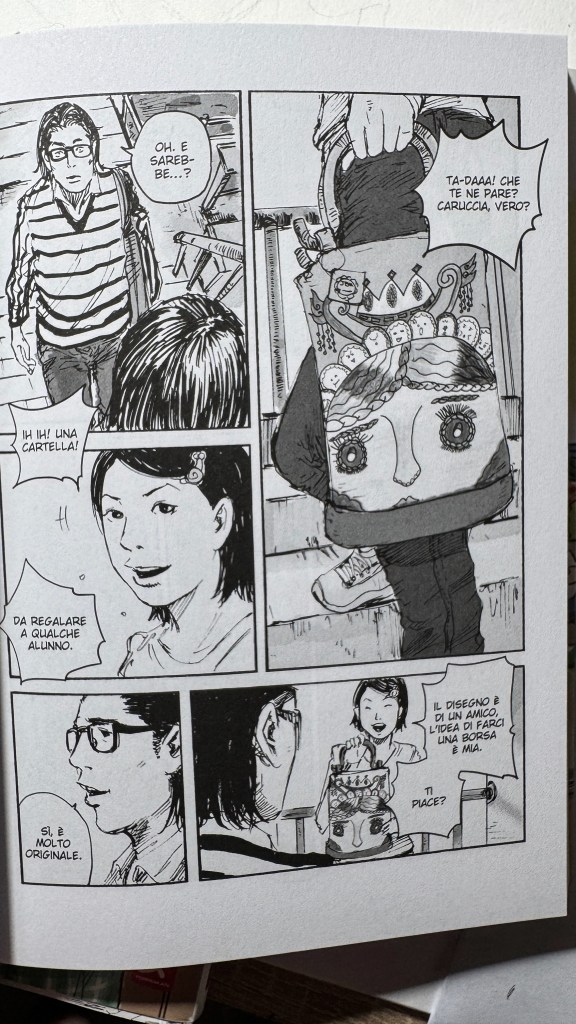
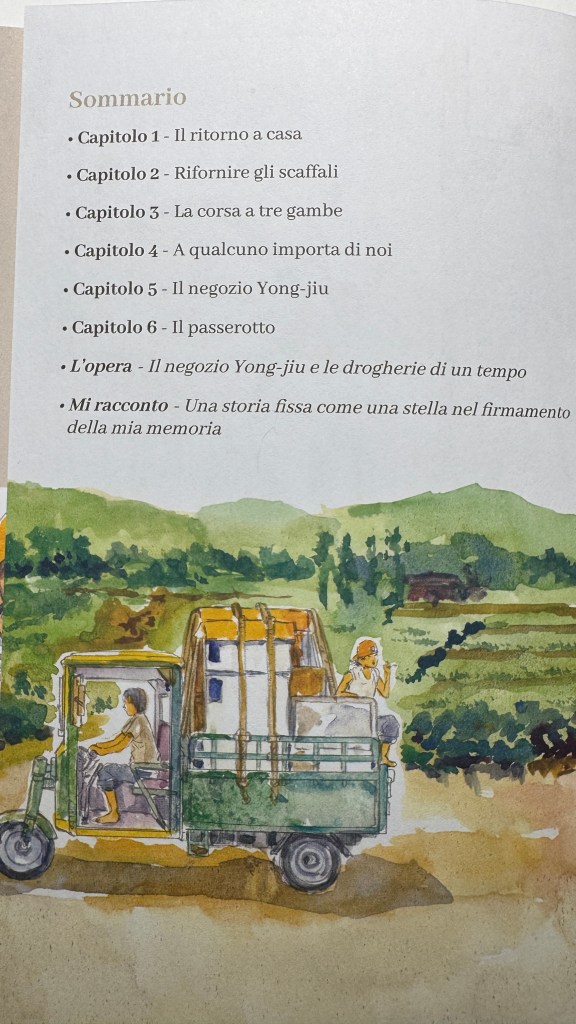
“The corner store” di Ruan Guang-min, se si accettano i difetti, allora è vero amore. 阮光民《The Corner Store》,意大利版。”The corner store”, italian review

向下滚动阅读中文版本。由 ChatGPT 翻译。Scroll for the English version (translated with ChatGPT)

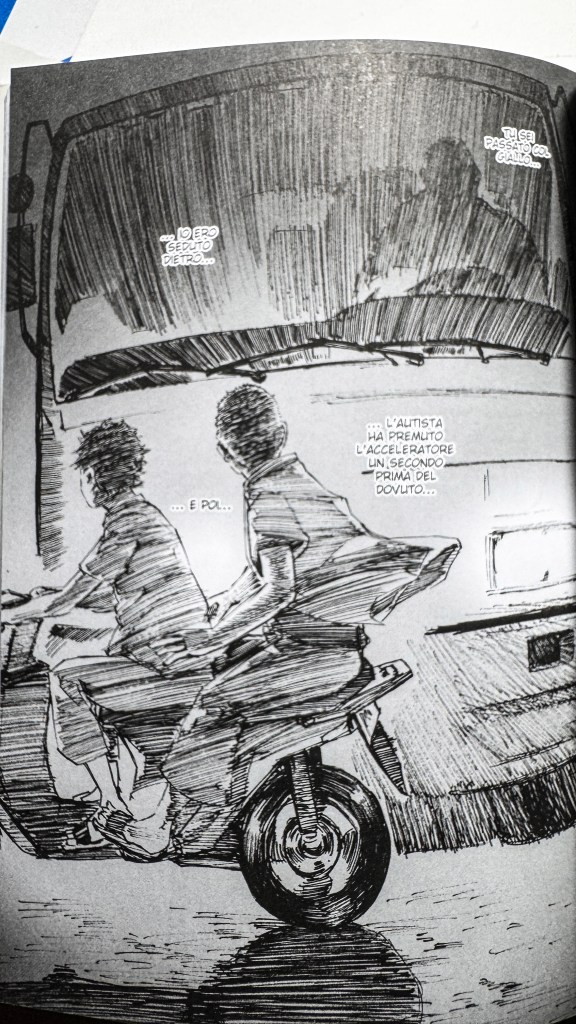
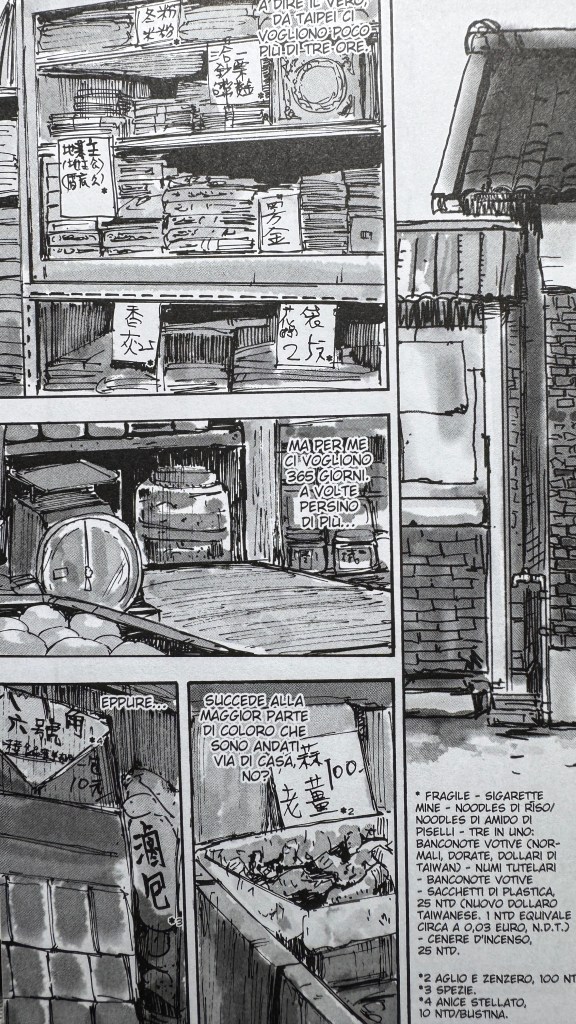
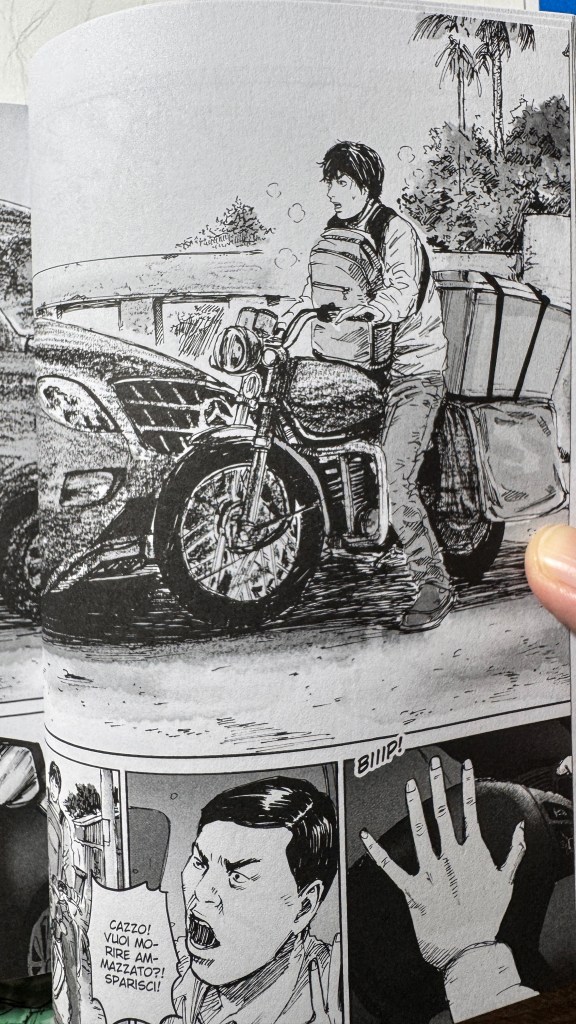
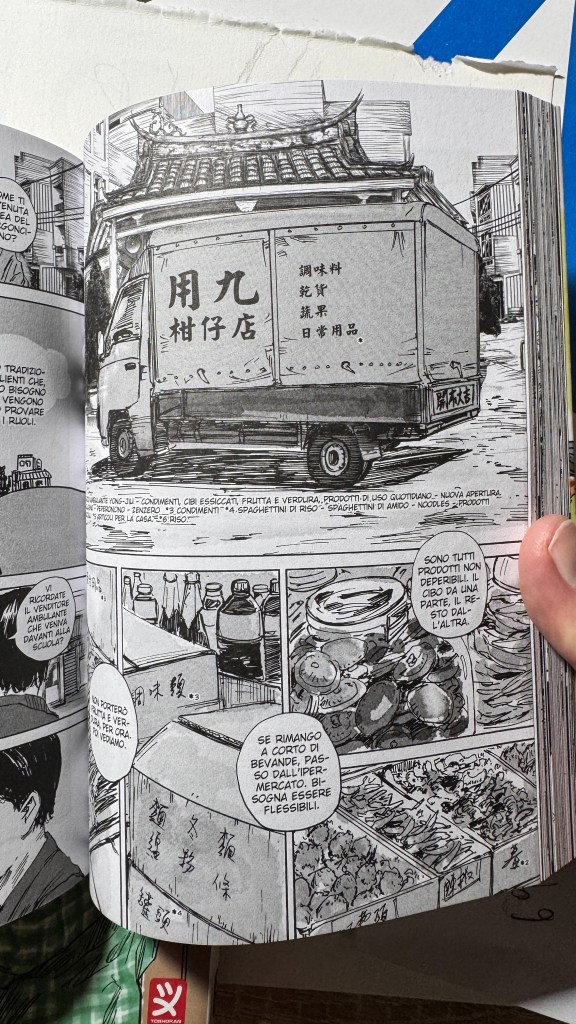
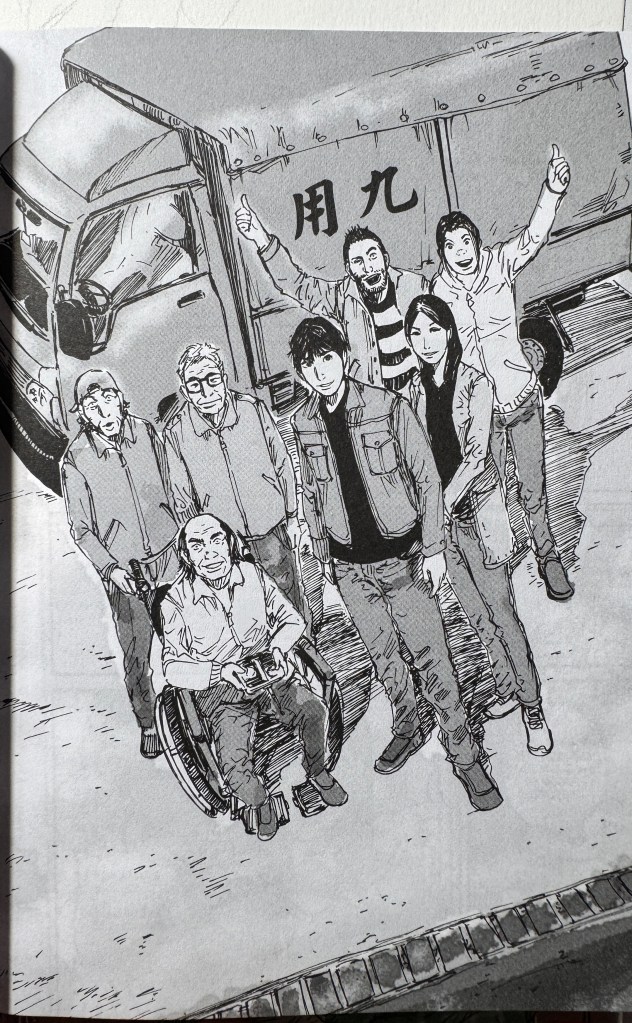
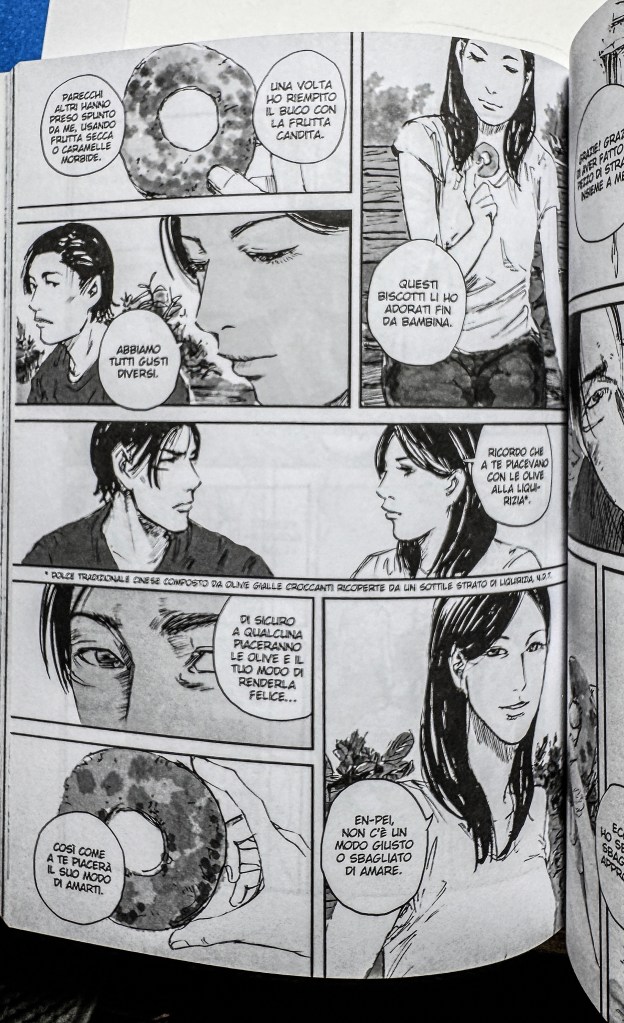
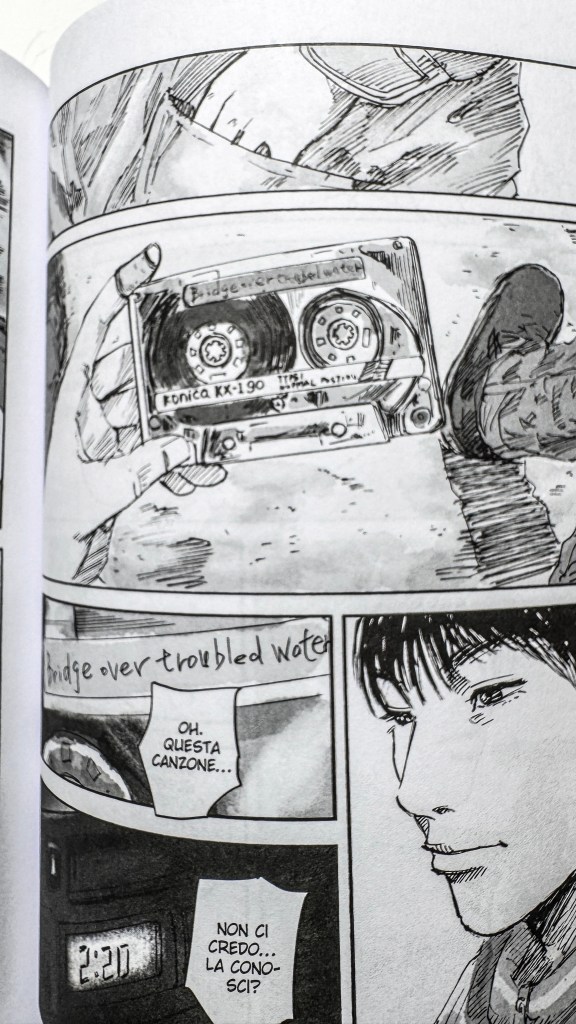
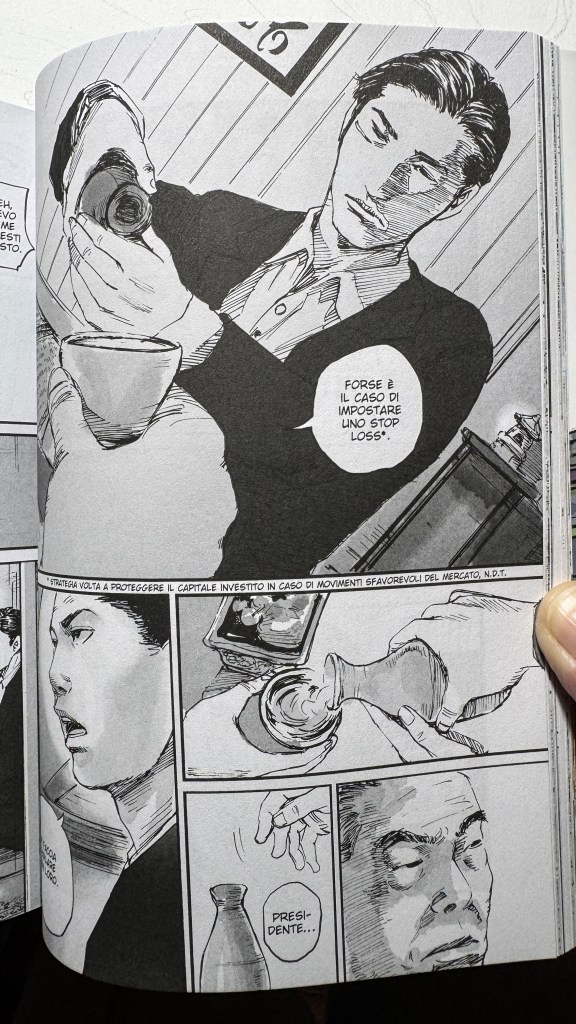
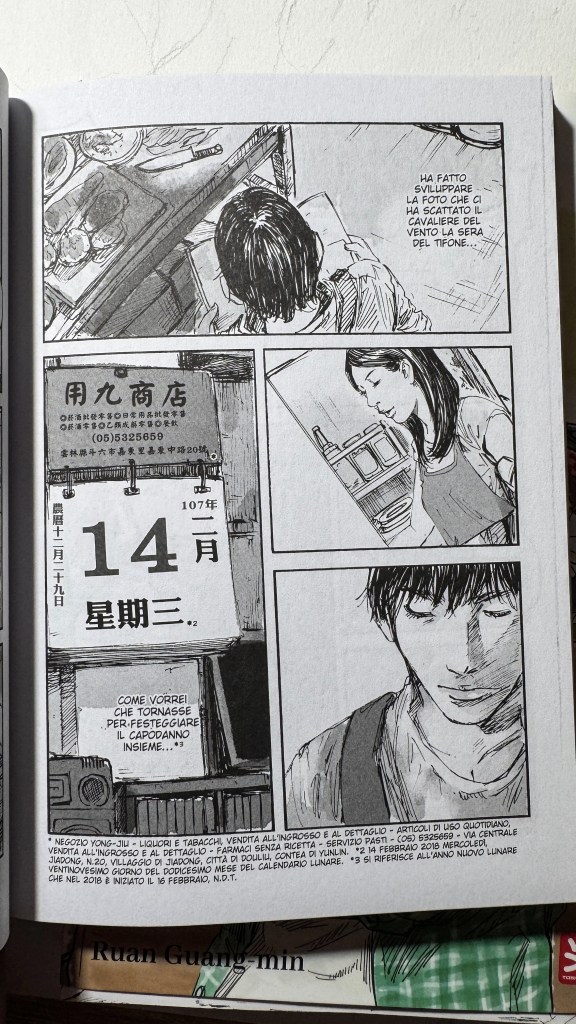
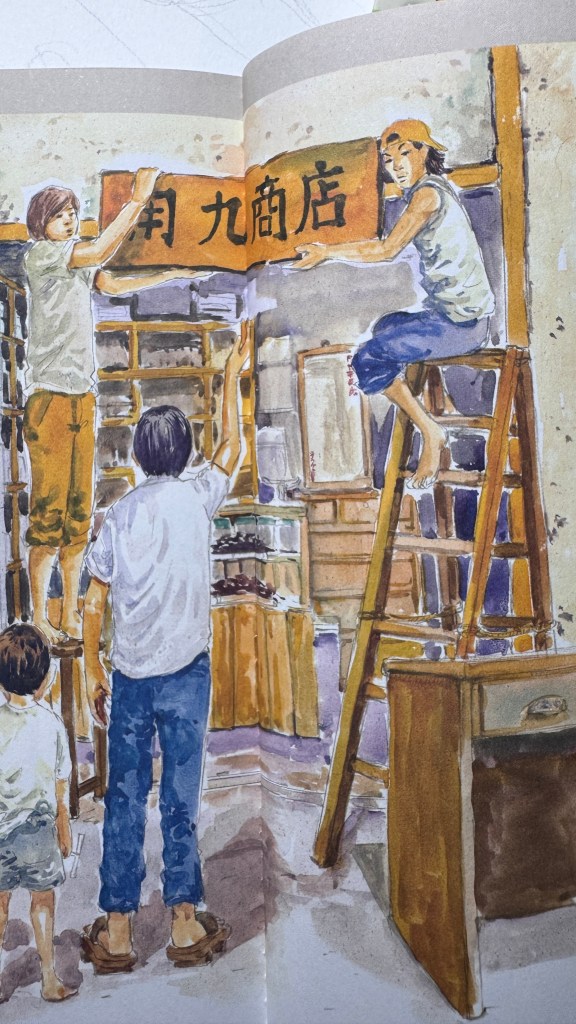
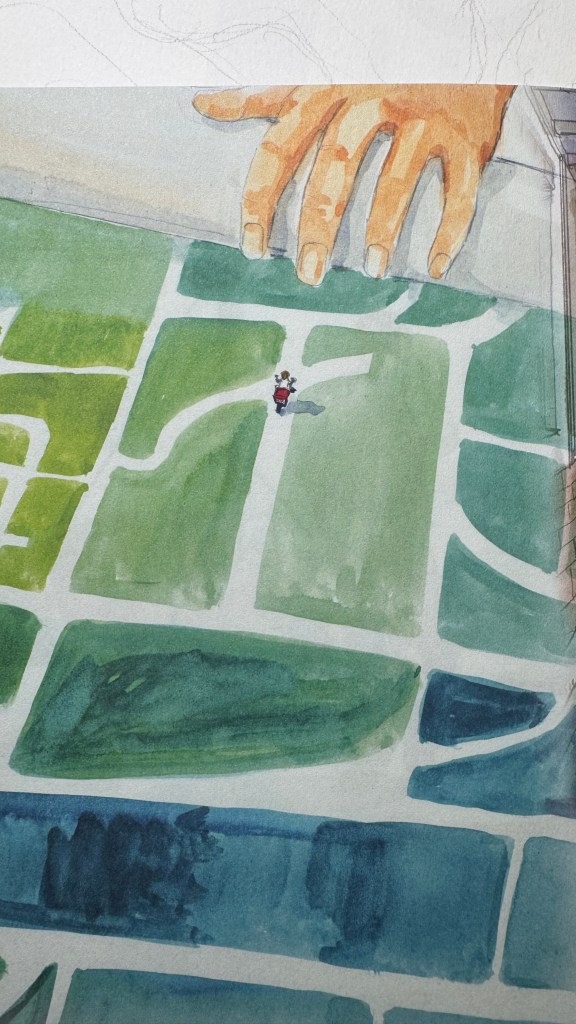
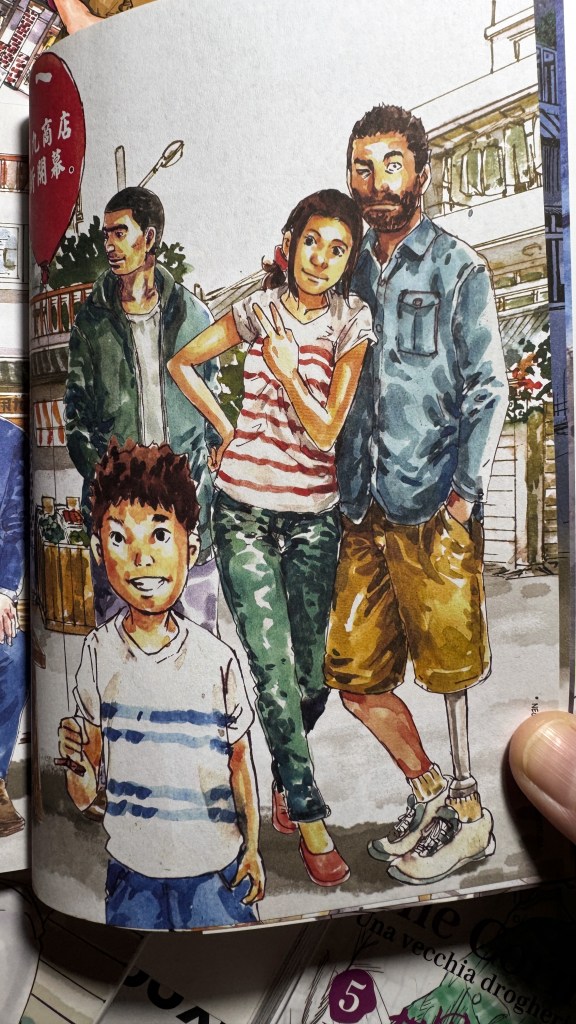
The corner store. Una vecchia drogheria è una delle uscite migliori degli ultimi anni. Sorprendente è dire poco. Ruan Guang-min, un autore taiwanese, porta in scena un insieme di personaggi normali, comunissimi, e certamente più interessanti dei vari superpotenziati che abitano i manga giapponesi. Il manhua taiwanese è largamente inesplorato in Italia, anche in alcune delle sue vette artistiche (come Chen Uen o Little Thunder). Da pochi anni la casa editrice Toshokan ne sta traducendo alcuni, con grandissimo favore del pubblico più maturo e raffinato.Guang-min è molto noto in patria per avere centrato storie corali imperniate su piccole attività commerciali di famiglia, ha vinto numerosi premi e i suoi manhua vengono trasposti in serie televisive. The corner store sente certamente l’andamento del drama, dello sceneggiato, non solo nel succedersi degli eventi, ma anche della scansione dell’azione in pagina, della prospettiva, dell’inquadratura. Guang-min è senza alcun dubbio uno dei migliori artisti che circolano tra gli scaffali italiani, la sua tecnica di disegno è sorprendente per l’efficacia, per l’icasticità, la velocità con cui la rappresentazione raffigurata diventa vivida, reale, vicina. La sua capacità di far correre l’occhio e la lettura è straordinaria. In questo lo ritengo supremo, inarrivabile.

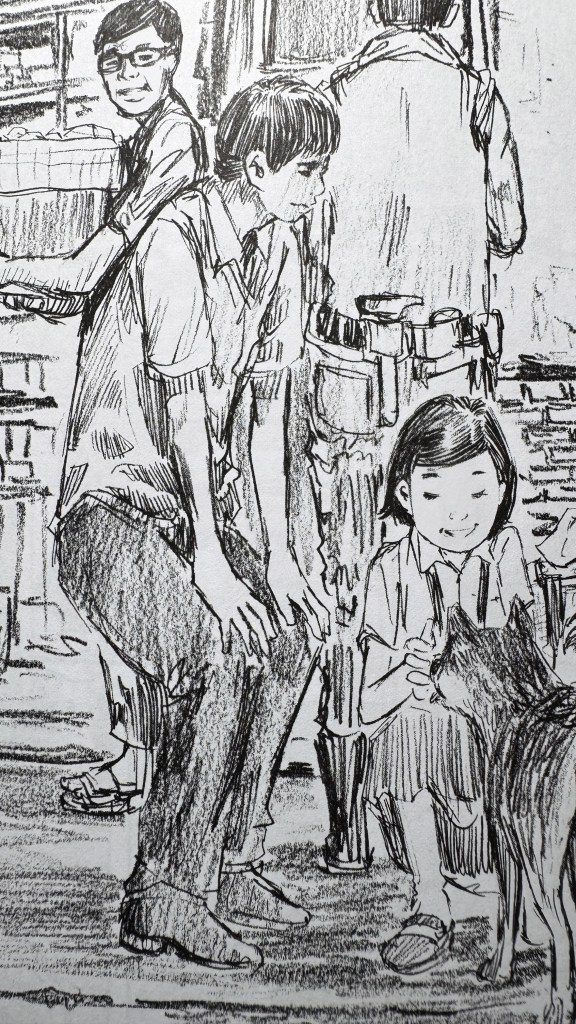
Lui disegna in digitale ma il tratto rimane sempre molto artigianale, con delle sporcature tipiche del carboncino, della matita grassa passata di taglio sul cartoncino ruvido. Non si perdono le linee ravvicinate dello schizzo a matita e a pennino, le finezze del pennello. Una attenzione allo strumento utilizzato che è praticamente ignota a molti mangaka giapponesi, che ci danno sempre un tratto fine e pulito, perfetto e anonimo, e che in Europa viene invece molto apprezzata poiché segno caratteristico e distintivo di una sola mano, di un unico individuo. L’unicità, la riconoscibilità, è sempre un elemento positivo per l’occhio europeo, poiché avvicina l’artista alla creazione divina.

L’emozione che mi ha suscitato questo manga è di una immensa nostalgia di qualcosa che non ho mai posseduto. Sono una X Gen, i “corner store” esistevano ai miei tempi, anzi, non c’era altro tipo di negozio. Si chiamavano “bottega”, “emporio”, “spaccio”, o meglio ancora, con il nome del proprietario. “Vado dal Carlino, dal Ieraci, da Torre”, oppure si usava il soprannome paesano “il Magnamagna”, “il Brigante”.

Per me erano posti terribili, dove andare perché necessario, per una richiesta ricevuta in famiglia, che per una bambina diventa un ordine. Lì dentro mi sentivo un agnello il mezzo ai lupi, un pezzo di carne da pesare, una merce da poter acquistare semplicemente prendendola dallo scaffale. Sin da piccola sentivo il puzzolente fiato del patriarcato sul mio collo. Gli sguardi sezionatori dei “vecchi” (magari quarantenni) che indugiavano sul mio corpo di scolara elementare come se fossi una sugosa pietanza ambulante. Le donne adulte o erano acquirenti, quindi di passaggio, oppure mogli dei titolari, quindi ipostasi dei mariti. Le bambine non sarebbero state ammesse in bottega, nemmeno se figlie del titolare. Troppi maschi, troppi vizi, alcool, sigarette, possibilità di violenza, e non ultima, la vicinanza al mondo del danaro, dell’attività commerciale, da cui le femmine venivano accuratamente tenute lontane.

Perciò il pensiero che avrei potuto aspettare il bus alla bottega, o fare i compiti assieme agli altri bambini, mangiucchiando biscotti, come hanno fatto i protagonisti di The corner store, mi ha letteralmente assestato una coltellata nelle costole. A me, questa vita, questi ricordi, che probabilmente sono condivisi da molti miei coetanei maschi, sono stati negati poiché nata femmina. E mi chiedo quanta distanza ci sia tra i negozietti d’angolo della remota provincia calabrese degli anni ’70-’80 e quelli della provincia taiwanese di qualche anno fa. Mi chiedo se le millennial di Taiwan abbiano sentito anche loro il peso dello sguardo maschile andando a prendere un ghiacciolo. E inevitabilmente mi dico di sì.

E questa cosa mi fa arrabbiare, e mi addolora.

Nel racconto di Guang-min i personaggi femminili non mancano, ma quelli importanti sono solo tre rispetto agli innumerevoli maschi. Tutte e tre sono legate a temi romantici, e una soltanto ha una caratterizzazione forte al di fuori della sfera sentimentale. Se tra i maschi avvengono dialoghi e considerazioni sul senso della vita, sui propri sentimenti e sul commercio, questo non avviene tra i personaggi femminili, che si sovrappongono o si lambiscono occasionalmente, spesso senza avere una reale interazione che non sia la condivisione dello spazio nella pagina. Manca anche un analogo rapporto intergenerazionale che si sviluppa attorno al protagonista maschile.

La lettura è sempre molto piacevole, davvero commovente. Ma si avverte questo ronzio, il rumore di fondo, quella distorsione della realtà data dall’ assenza di metà del mondo. Se il manga giapponese è tristemente famoso per questa assenza o per la trasfigurazione delle donne in bambole scervellate, in una narrazione di persone ordinarie era legittimo avere una aspettativa più alta. Qui la scarsa presenza femminile non è una scelta editoriale, ma viene spontanea come specchio della società.

Se mi soffermo su questo punto invece che sulle altre qualità del fumetto è per due ragioni: la prima è che questa serie ha ricevuto moltissimi consensi e recensioni, e gli aspetti tecnici e narrativi sono stati già ampiamente esplorati. La seconda è è perché ritengo sia molto importante sottolineare come spesso i maschi descrivano un mondo a metà (le recensioni scritte da donne sono ancora troppo poche, sempre indulgenti o poco attente alla rappresentazione mediatica dei generi). Noi donne siamo abituatissime a immedesimarci in personaggi maschili, ecco perché il female gaze ci sconvolge sempre, o la ragione dell’enorme successo dei boy’s love.

Sentirsi tagliate fuori da un racconto di supereroi è brutto, ma se succede in una storia di persone ordinarie, si sente un dolore tanto forte quanto più è bella l’opera. E The corner store è veramente bellissimo. La vitalità dell’andamento narrativo, mescolata a temi umani così forti e toccanti, l’espressività dei personaggi, rendono questo manhua un vero tesoro, quel tipo di racconto da leggere e rileggere nell’arco del tempo, nel quale rivedersi, ogni volta cambiati (e uso il maschile di proposito) a seconda dell’età, delle scelte di vita. A colpire direttamente è però l’abilità artistica di Guang-min, che ha uno stile molto incisivo, carico nel segno ma privo di orpelli, che insiste nel dettaglio pur concedendosi la sporchevolezza della bozza. Una magia che pochi artisti sanno fare.

Personalmente ho apprezzato molto il personaggio di En Pei, proprio per la sua scelta (e anche perché è molto carino).

Da rimarcare lo splendido lavoro fatto dall’editore Toshokan sulla traduzione e sulle note, che hanno spesso occupato una parte considerevole dei margini.

Ruan Guang-min è anche un artista molto social e estremamente disponibile e alla mano: risponde sempre a tutti e tutte con parole di ringraziamento e gentilezza. Questo è il suo account Instagram, dove pubblica spesso anche disegni a colori da lasciare senza fiato.


漫画正是以这句话结束的:如果能够接受对方的缺点,那就是真爱。也许对漫画来说也适用吧?我想是的。

《小角落杂货店》(The Corner Store)是近年来最出色的新作之一,用“令人惊艳”来形容都显得太轻了。台湾漫画家阮光民带来了一群平凡普通的人物,比起那些充斥日本漫画的超能力角色,他们真实得多,也有趣得多。
台湾的漫画(manhua)在意大利基本上还是一片未被开发的领域,即使是像陈又宁、Little Thunder这样达到艺术高峰的作品也鲜有人知。最近几年,Toshokan出版社开始翻译一些台湾漫画,深受成熟且品味独特的读者群体欢迎。

阮光民在台湾非常有名,擅长描绘以家庭小型商店为背景的群像故事,赢得了无数奖项,他的作品也常常被改编成电视剧。《小角落杂货店》充满了电视剧般的节奏感,不仅体现在故事的发展上,也体现在分镜、透视、构图等画面布局上。
阮光民无疑是目前意大利书店里最杰出的艺术家之一。他的绘画技巧令人惊叹:画面生动、凝练、充满现实感,几乎一瞬间就能把读者带入故事之中。他让眼睛和思绪飞驰流动的能力,堪称无敌。对此,我认为他是至高无上的,无可匹敌。

虽然他使用数位工具作画,但笔触依然非常有手工感,保留了炭笔、粗糙铅笔在粗纸板上划过的那种质感。
他从不抹去铅笔或钢笔速写的紧密线条,细致的笔刷处理也清晰可见。对绘图工具细腻的掌控,在许多日本漫画家那里是很少见到的——他们往往追求细腻干净、完美而略显无个性的线条。而在欧洲,这种独特、辨识度高的个人风格反而非常受到推崇,因为它让艺术家显得像是独自创世的存在。
独特性辨识性,始终是欧洲读者眼中极其正面的价值。

这部漫画给我带来了一种对未曾拥有过的东西的巨大怀念。我是X世代,当年,”corner store”(街角杂货店)确实存在,事实上,那个时候只有这种店铺。它们被叫作“杂货店”“百货店”“供销社”,或者直接叫店主的名字,比如“去卡尔利诺家”、“去耶拉奇家”、“去托雷家”,又或者用乡村的绰号,“去大胃王家”、“去土匪家”。

对我来说,那些地方是令人害怕的地方,必须去,是因为家里交代了任务,对一个小女孩来说,就是无法抗拒的命令。
走进去,我仿佛是一只走入狼群的小羊,是一块等待被称重的肉,是货架上可以随手取走的商品。从小我就感受到了那股刺鼻的父权气息。
那些“老男人”(其实可能才四十岁左右)的目光,在我小小的女学生身体上流连,就像在打量一盘新鲜美味的菜肴。
成年女性不是匆匆而过的顾客,就是老板的妻子,是男人的附属品。小女孩则根本不应该出现在杂货店里——那里有太多男人、太多恶习(酒、烟、暴力),还有最重要的,钱与商业的世界,是女孩子被刻意远离的禁地。

因此,当我读到《小角落杂货店》里那些小孩可以在店里做作业、吃饼干、等公交时,我的心仿佛被狠狠地捅了一刀。
这种生活,这样的回忆,可能是很多男性同龄人共有的,而对我而言,仅仅因为是女孩,就被无情地剥夺了。
我不禁想,1970-80年代遥远的卡拉布里亚乡村小杂货店,与近年台湾乡镇的小角落杂货店之间,究竟有多少相似?
台湾的千禧一代女孩,在买冰棒时,是否也曾感受到男性目光的沉重?我想,答案是肯定的。

而这让我愤怒,也让我悲伤。

在阮光民的故事里,虽然也有女性角色,但重要的只有三个,相较之下男性角色却数不胜数。这三位女性角色都与浪漫情节有关,只有一位在爱情之外有着强烈的个性刻画。
男性角色之间有关于人生、情感、商业的对话和思考,而女性角色之间几乎没有真正的互动,顶多是偶尔擦肩而过,在画面上共享同一空间而已。
缺乏女性之间类似的代际传承与联系——而这种联系,男性角色间却是故事主轴之一。

阅读体验依然非常愉快,很多地方令人感动,但背景中,总有一种嗡嗡作响的不协调感:女性的缺席,扭曲了现实的完整性。
如果说日本漫画因女性角色的缺失或异化(变成无脑的娃娃)而臭名昭著,那么在描写普通人生活的作品中,我们本应期待更高标准。
《小角落杂货店》中女性的少数,不是编辑选择,而是自然而然地反映了现实社会。

我之所以特别强调这一点,有两个原因: 第一,这部作品已经收获了大量赞誉和评论,技术和叙事上的优点大家都讲得很多了; 第二,我认为指出这种现象非常重要:男性创作者经常只描绘出一半的世界,而女性评论者又太少,且往往太宽容,或者缺乏对性别呈现的敏感观察。

我们女性早就习惯于代入男性角色了,所以每当遇到真正的“女性视角”(female gaze)时,总会被深深震撼;也因此,boy’s love作品在女性群体中才会如此成功。
如果在超级英雄的故事里被排除在外已经让人心寒,那么在讲述普通人日常生活的故事里被排除,更是深深刺痛人心——尤其是当这部作品本身如此美丽动人时。
《小角落杂货店》正是这样一部杰作。
那种温暖的人情流动,与深刻动人的人生主题交织在一起,加上角色鲜活的表情和动作,成就了这部值得反复阅读、随年龄与人生经历不同而不断有新感悟的珍宝(我这里故意用了男性词形)。

最直接打动人心的,还是阮光民那种独特的艺术技巧——线条厚重有力,但绝不华而不实;细节充沛,却又大胆地保留粗糙与不完美。他掌握的那种“草图中的魔力”,是极少数艺术家才能做到的。

我个人非常喜欢**恩沛(En Pei)**这个角色,特别是因为他的选择(还有,他真的很可爱)。

还要特别表扬Toshokan出版社在翻译和注释上的用心——许多时候,注释占据了大量页面边缘,非常丰富而且清晰。

最后要说,阮光民本人也是一个非常亲切随和的艺术家,超级活跃在社交媒体上。他总是认真、友善地回复所有留言。这是他的Instagram账号,他经常分享一些让人屏息的彩色插画作品

阮光民也是一个非常亲切、极具亲和力的艺术家:
他总是温柔地回复所有粉丝的留言,表达感谢。
这是他的Instagram账号,他时常发布令人屏息的彩色插画。


The comic ends precisely with this sentence: if you accept the flaws, then it’s true love. Maybe it’s the same for manga? I’d say yes.
The Corner Store — an old-fashioned grocery shop — is one of the best releases in recent years. Calling it “surprising” would be an understatement. Ruan Guang-min, a Taiwanese author, brings to life a group of ordinary, everyday characters who are far more interesting than the super-powered ones populating Japanese manga. Taiwanese manhua are still largely unexplored in Italy, even in their artistic peaks (such as Chen Uen or Little Thunder). Only recently has the publisher Toshokan started translating some of them, to great acclaim among more mature and refined readers.

Guang-min is very famous in his home country for his ensemble stories focused on small family-run businesses. He has won numerous awards, and his manhua have been adapted into TV series.
The Corner Store definitely carries the pacing of a drama, not only in how events unfold but also in the way action is laid out on the page — the perspective, the framing. Guang-min is without a doubt one of the best artists currently available in Italian bookstores. His drawing technique is astonishing for its effectiveness, its vividness, and the speed with which the images come to life, feeling real and close. His ability to guide the reader’s eye and reading flow is extraordinary. In this, I consider him supreme, unreachable.

He draws digitally, but his linework always retains a handmade quality, with the smudges typical of charcoal or a soft pencil rubbed sideways on rough paper.
You can still see the close lines of pencil and pen sketches, the finesse of the brush.
Such attention to the tool used is practically unknown to many Japanese mangaka, who often offer clean, thin, flawless (and anonymous) lines — whereas in Europe, this more personal, handcrafted touch is highly appreciated because it reveals the artist’s individual hand.
Uniqueness, recognizability, is always a positive element for European eyes, as it brings the artist closer to the divine act of creation.

The emotion this manhua stirred in me was an immense nostalgia for something I never actually had.
I’m from Generation X — “corner stores” existed in my time; in fact, there weren’t any other kinds of shops. They were called “bottega”, “emporio”, “spaccio” — or, better yet, by the owner’s name: “I’m going to Carlino’s, Ieraci’s, Torre’s.”
Or sometimes by their nickname: “Magnamagna” (Big Eater), “the Brigand”.

To me, they were terrible places — places you went because you had to, often for a family errand which, for a little girl, felt like an unbreakable command. Inside, I felt like a lamb among wolves, a piece of meat to be weighed, merchandise that could be plucked off a shelf.
Even as a child, I could feel the foul breath of patriarchy on my neck.
The scrutinizing stares of the “old men” (often barely forty) lingering on my elementary-school girl’s body as if I were a tasty, walking morsel.
Adult women were either customers — thus fleeting presences — or the shop owners’ wives — mere extensions of their husbands.
Little girls weren’t really welcome in those shops, not even if they were the owners’ daughters.
Too many men, too many bad habits — alcohol, cigarettes, the ever-present risk of violence — and not least, the proximity to the world of money and business, from which females were carefully kept away.

So the idea that I could have waited for the bus at a shop, done homework together with other kids while munching on cookies — as happens to the protagonists in The Corner Store — felt like a stab in the ribs.
This life, these memories, which were probably shared by many of my male peers, were denied to me simply because I was born female.
And I wonder how far removed the little corner stores of rural Calabria in the ’70s and ’80s really are from those in Taiwanese provinces just a few years ago.
I wonder if millennial girls in Taiwan, too, felt the weight of male gazes when buying a popsicle.
And inevitably, I tell myself — yes, they did.

This thought both angers and saddens me.

In Guang-min’s story, there are female characters, but only three important ones compared to the countless male ones.
All three are tied to romantic subplots, and only one has a strong characterization outside of sentimental themes.
While the male characters have conversations about the meaning of life, emotions, and business, this kind of exchange doesn’t happen among the female characters, who merely overlap or brush against each other, often without meaningful interaction beyond sharing space on the page.
There’s also no intergenerational bond among the women like there is around the male protagonist.

The reading experience remains very pleasant and truly moving.
But there’s this constant hum, this background noise — the distortion caused by the absence of half the world.
If Japanese manga are sadly notorious for this absence or for turning women into brainless dolls, in a story about ordinary people, one might have hoped for something better.
Here, the underrepresentation of women isn’t an editorial choice: it feels natural, a mirror of society.

If I’m focusing on this aspect rather than the other many qualities of the comic, it’s for two reasons:
First, because this series has already received plenty of praise and reviews discussing its technical and narrative strengths.
Second, because I believe it’s crucial to highlight how often men describe only half the world (and how there are still too few female reviewers, often overly forgiving or not very attentive to gender representation).
We women are very used to identifying with male characters — that’s why the female gaze shocks us so much, and partly why boy’s love stories are so incredibly popular.

Feeling excluded from a superhero story is painful; feeling excluded from a story about ordinary people is even worse — especially when the work is so beautiful.
And The Corner Store is truly beautiful.
The vitality of the narrative flow, the touching human themes, and the expressiveness of the characters make this manhua a true treasure — the kind of story you reread over time, finding yourself in it again and again (and yes, I’m using the masculine consciously) depending on your age and life choices.

What strikes directly, however, is Guang-min’s artistic skill: his style is bold yet stripped of frills, deeply focused on detail while still embracing the roughness of a sketch.
A magic that few artists can achieve.

Personally, I really appreciated the character of En Pei, both for her choices and because — well — he’s also very handsome.

It’s worth highlighting the excellent work done by publisher Toshokan on the translation and notes, which often took up a significant part of the margins.

Ruan Guang-min is also a very social and extremely approachable artist: he always replies to everyone with words of gratitude and kindness. This is his Instagram account, where he often posts breathtaking illustrations.